A Toronto Miracle – Author Isaka Kotaro’s trip to the 2025 Toronto International Festival of Authors
Isaka Kotaro made his literary debut in 2000 with Ōdyubon no inori [Audubon’s Prayer]. Since then, he has garnered a devoted following through a growing oeuvre of popular mystery novels, including Ahiru to kamo no koin rokkā [The Foreign Duck and the Native Duck’s Coin Locker], Gōruden suranbā [trans. Remote Control], and Jūryoku piero [Gravity Pierrot]. He continues to pour himself into his writing today, publishing a new, full-length version of Sayonara Jabawokku [Farewell to Jabberwock] in 2025, the twenty-fifth anniversary of his debut. Coinciding with this career milestone, the Japan Foundation, Toronto invited Isaka to one of the world’s leading international literary festivals: the Toronto International Festival of Authors (TIFA). While Isaka’s novels have already attracted a global readership through translations into more than twenty languages, the trip to Toronto marked his first visit to North America, offering a rare chance for Isaka, a self-professed “non-traveler,” to see firsthand how his work resonates abroad. What did he encounter on his journey—and how did he feel?
(Interviewer: Sakurai Shin)
– The 2025 TIFA convened in Toronto, Canada, from October 29 to November 2, 2025. Over its run, the event drew 200 writers from around the world and a total attendance of about 20,000. In addition to a screening of Bullet Train, a film based on one of your novels, the program featured discussions, book signings, and other elements that sent a lively buzz through the city. How was the trip for you?
I came out of the trip feeling really glad I went. I’ll explain more about that as we go along, but the thing is, generally speaking, I actually don’t like to travel. I think my wife enjoys it a lot, which I do feel bad about . . . But maybe it’s a case of “If she’s having fun, then I have a good time, too.” Personally, I’d rather stay home and play video games or something. I’ve heard that there are two types of novelists: those whose interests point starward, and those more interested in insects. I’m most definitely the latter. Immersing myself in small, enclosed worlds—that’s what’s always suited me best.
I’m not fond of doing public events like book signings, either. Even in Japan, I’ve only ever done one or two signings, which is on the low end of the scale. People who come to a signing of mine already like my novels, and it feels great when they tell me what my work means to them. But then I worry that I might start getting a big head, which scares me. Writing a novel is quiet, solitary work, and I don’t think I can write well from a self-important mindset. Another reason I don’t like public events much is that I’m just such an ordinary person. I worry readers might be disappointed: “This is the guy who writes these books?”
Seeing how it’s been twenty-five years now since I released my debut novel, when the Japan Foundation reached out about this trip, I looked at it as a once-in-a-lifetime opportunity and decided to take the plunge. My novels have already been translated and gained some recognition in parts of Asia, but things are just getting started in the English-speaking world. My agency encouraged me to go, saying that I’d be getting more and more visibility now that the film adaptation of my book Maria bītoru [trans. Bullet Train] was out, with Brad Pitt starring in it. One of the main reasons I’m hesitant to travel overseas is the language issue. My English isn’t good enough to communicate directly, and when I try to express myself through an interpreter, I worry about whether what I say is really getting across correctly. Still, I figured that if the staff at the Japan Foundation were going to be there taking care of me, it would probably be all right.
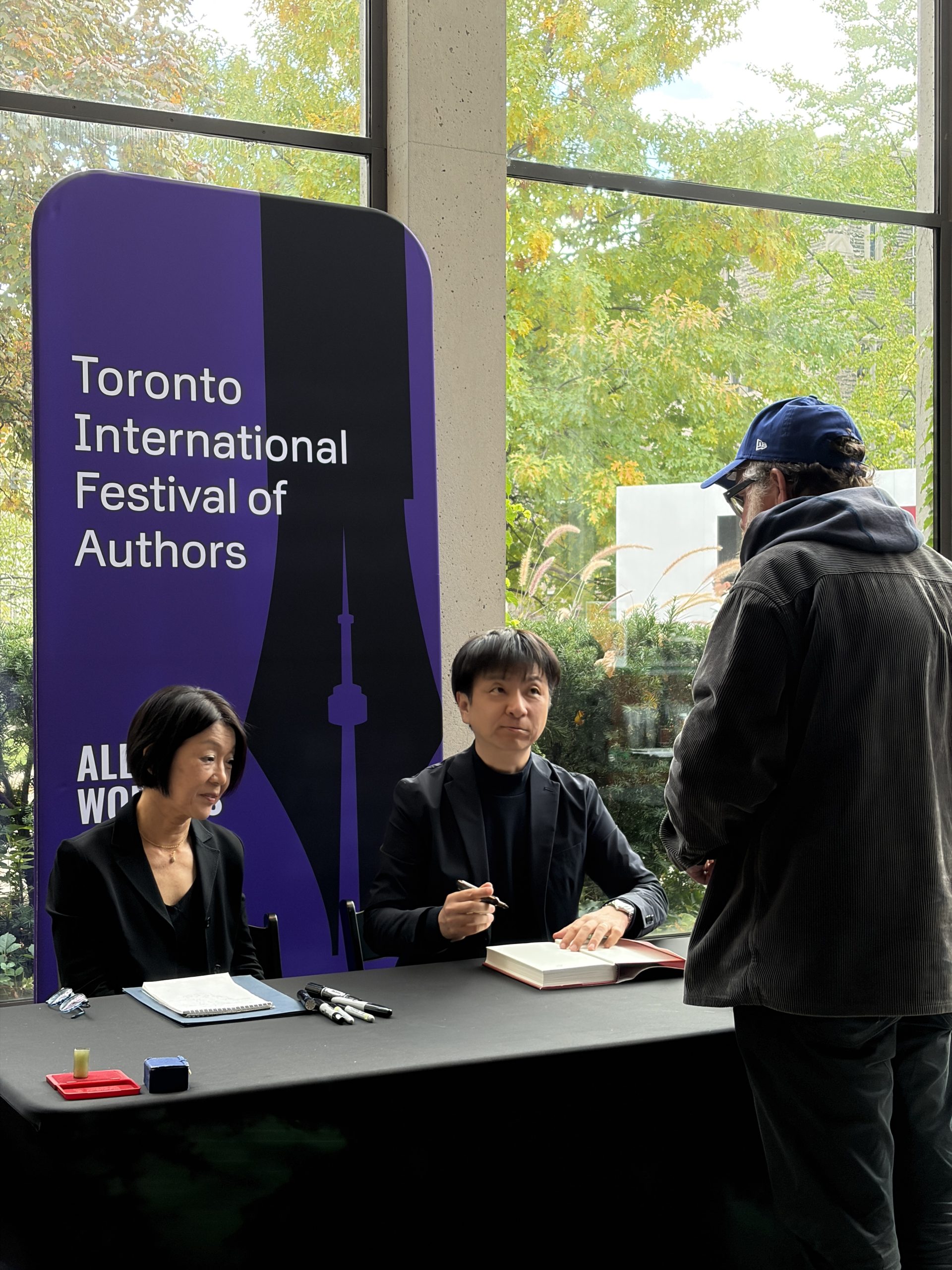
The Toronto International Festival of Authors (TIFA)
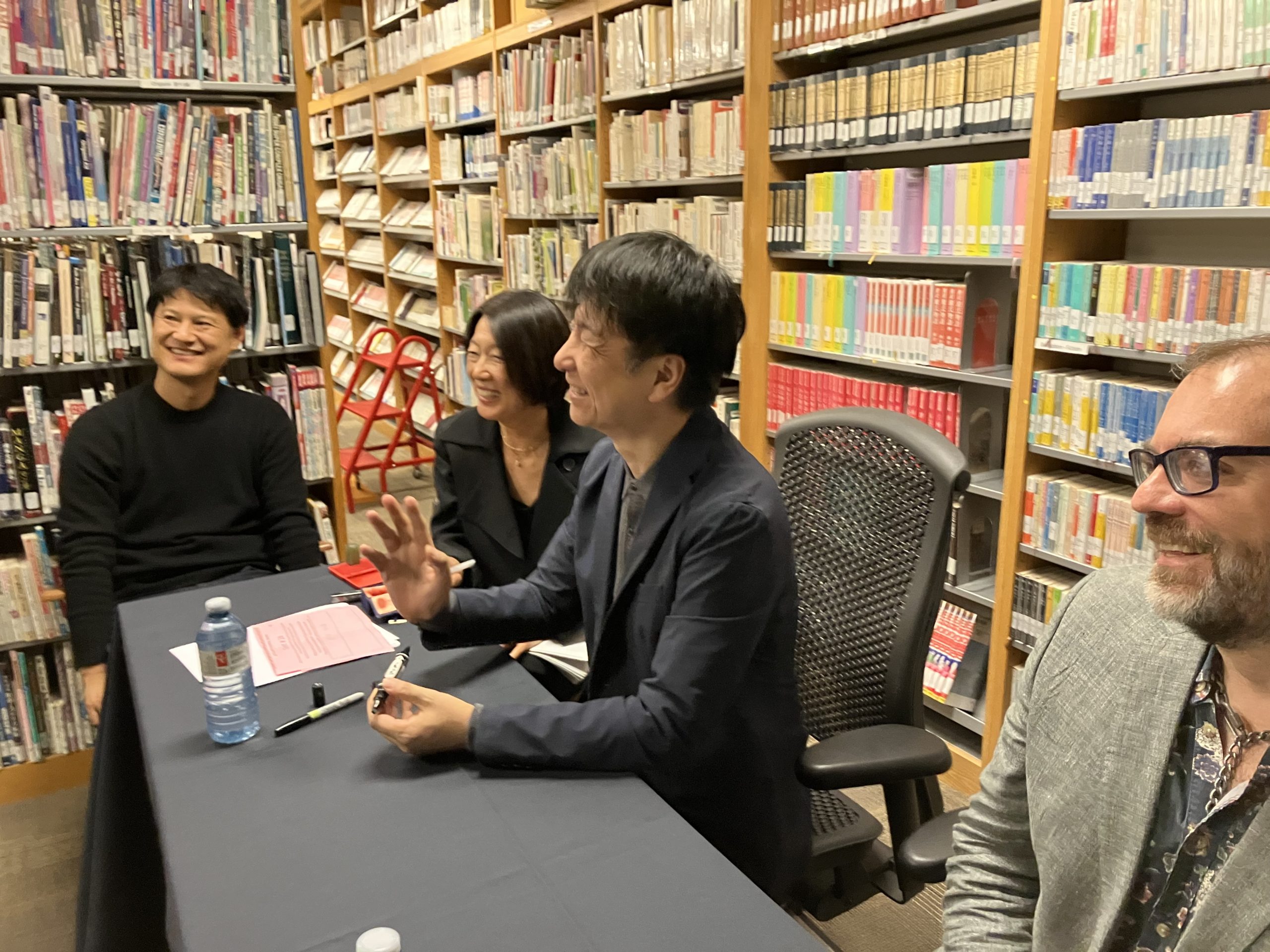
Isaka appeared at many events and signings during his time in Toronto, including this event hosted by the Japan Foundation, Toronto.
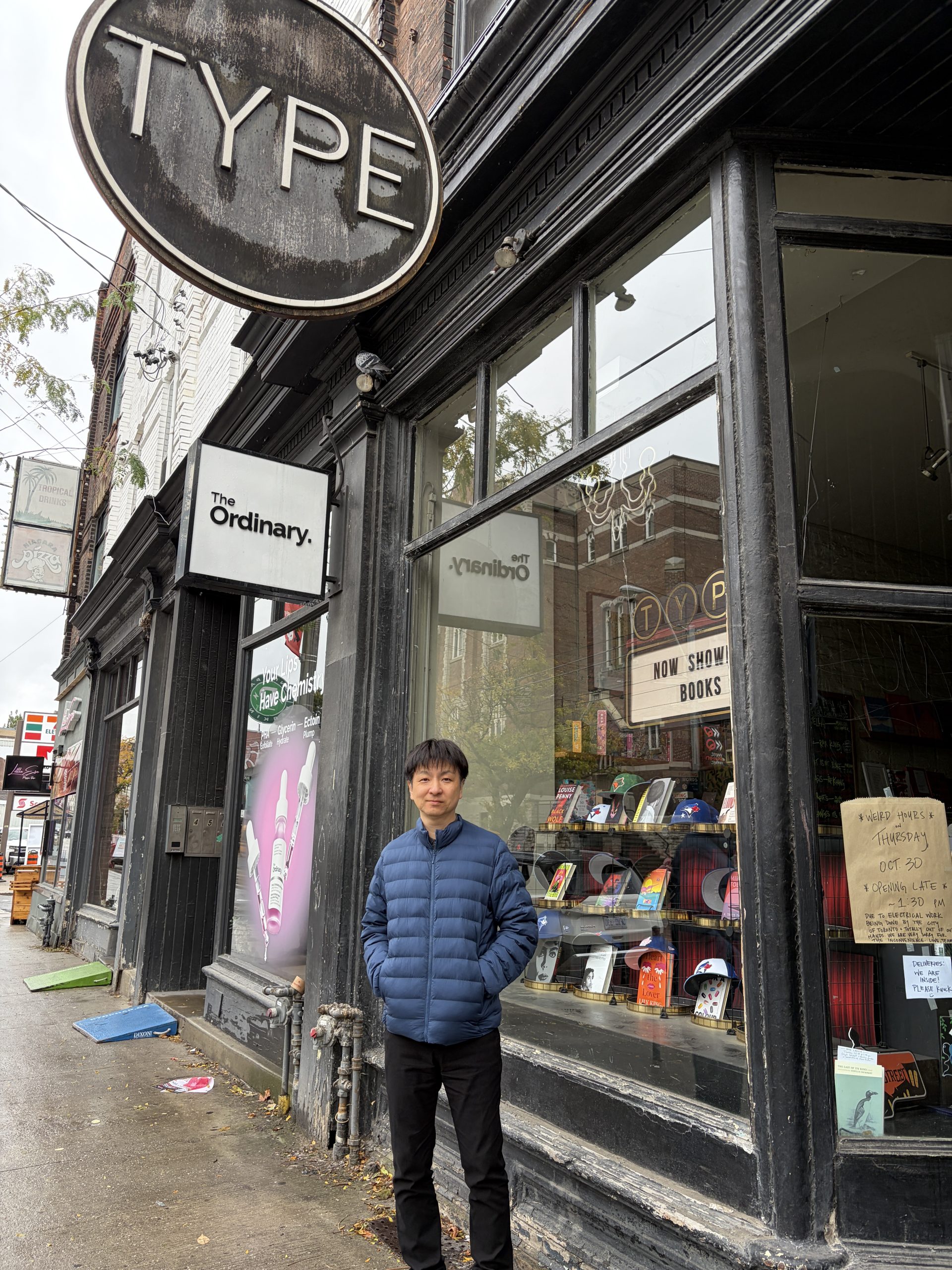
-After arriving in Toronto, you got going right away. You strolled through Little Italy and High Park, the city’s largest park, and signed English editions of your novels at TYPE Books, which has several locations around town.
Toronto was a beautiful city. There were streetcars gliding through the neat, orderly townscapes, parks and stadiums dotting the area; the boundaries between city and nature felt seamless. It kind of reminded me of Sendai, where I live—an “upgraded version of Sendai,” I guess, although I’d probably get in trouble back home for saying that. I’m not trying to say one is better than the other, you know (Laughs). Toronto obviously has a multicultural, multiethnic element, with Little Italy and Chinatown, but it still seemed really safe. If I could speak English, I bet it’d be a fun place for me to live. One of the bookstores I visited didn’t have any power while I was there, so I was signing books in the gloom, which was a strange experience. No one really knew who I was in Toronto, and I think that helped me return to my starting point and feel humble. That was nice.
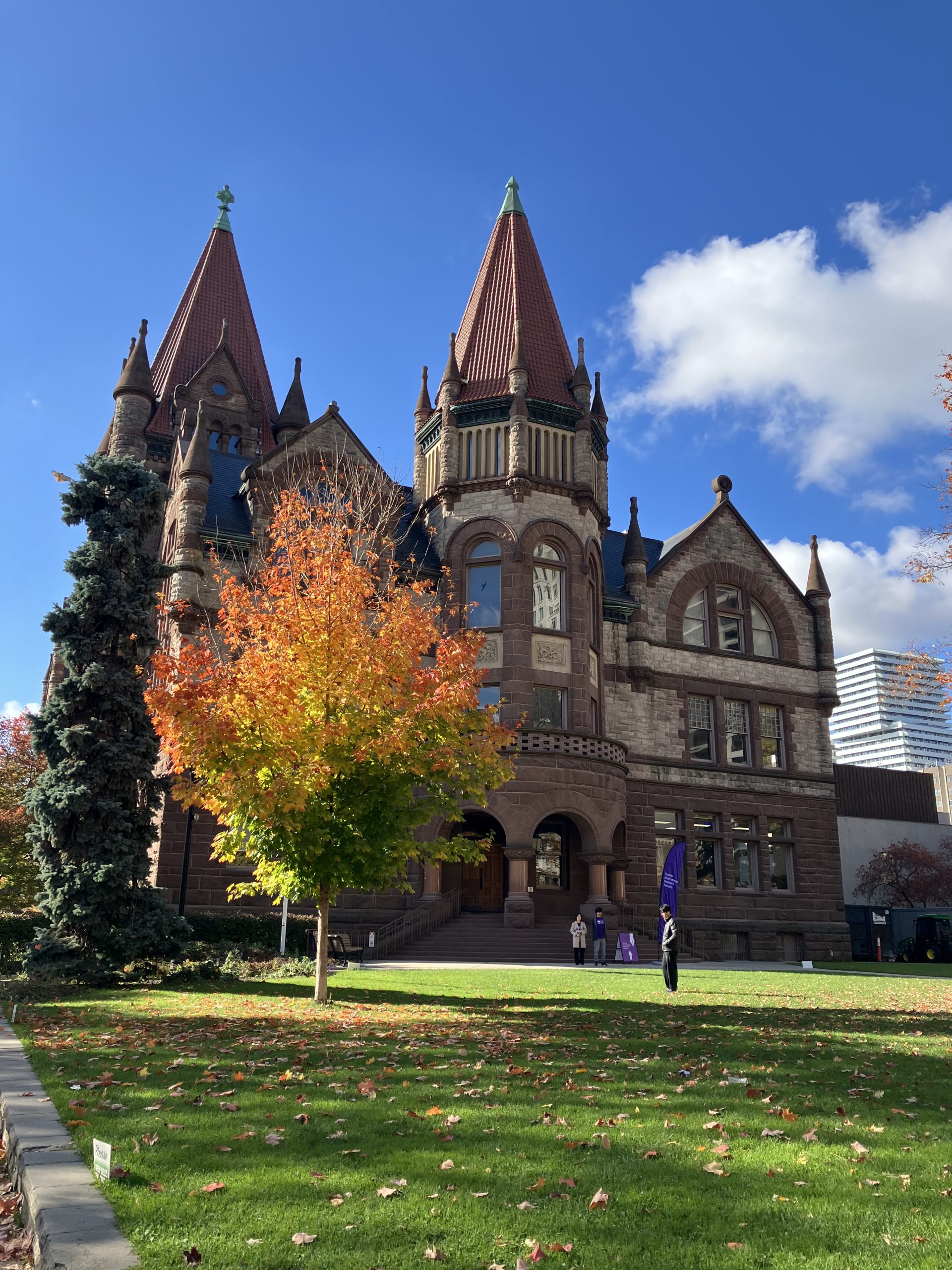
Isaka also enjoyed sightseeing in Toronto, which was in peak autumn foliage season.
–On October 29, a screening of Bullet Train took place at Innis Town Hall, a building at the University of Toronto’s Innis College. At the start of the screening, you thanked the audience for coming out even though Toronto’s major-league baseball team was playing in the World Series that day. You then mentioned that this was your first trip to North America, as your distaste for traveling had led you to turn down invitations to visit the United States for film shoots and previews in the past. You also noted that, while the movie version of Bullet Train differs from the novel in some ways, it has its own uniquely cinematic charms that make it a production you genuinely love. And you said, “Shinkansen trains are actually safe; when you’re on an actual bullet train, you won’t see any of the scary stuff that happens in the movie. I hope you all take the chance to ride one if you ever visit Japan.”
On October 30, the Japan Foundation, Toronto hosted a talk event titled “Crafting Twists and Thrills: A Conversation with Author ISAKA Kotaro.” The moderator was Brian Bergstrom, a Montreal-based translator who worked on the English version of 777 toripuru sebun [trans. Hotel Lucky Seven].
It was my first time meeting Brian in person, and I was happy to find him such a kind, charming person. When he asked what made me want to become a writer, I told him about a book my father gave me in high school: Sakazaki Otsuro’s E to wa nani ka [What Is Painting?]. The book’s obi* quoted the line, “Life is short, and you only get one shot at it. If you can pour that life into your imagination, there’s no happier way to live.” As I told Brian, reading that made me want to find a job that would let me use my imagination. When he asked about writers who had an influence on me, I talked about how Oe Kenzaburo crafted his prose and how John Irving shaped my writing through stories that are full of bleak situations and setbacks but never lose their humor, topping things off with a kind of positive glow.
* An obi is a paper band that goes over a book’s cover. It usually includes blurbs and a basic rundown of the work.
Brian had a question about what comes first when I build a story: the plot or the characters. I went into my creative process a bit, explaining that I come up with the twist first, the startling element, and then gradually firm things up around that. I don’t draw up “story blueprints” in advance, and I don’t use characters as my starting point, either. It seemed clear to me that the people in the audience had read my work closely, too, with their questions about how I’d come up with titles and shaped my characters. At the signing after the talk, I met people who said they read my books with their children and others who even brought Chinese translations for me to sign.
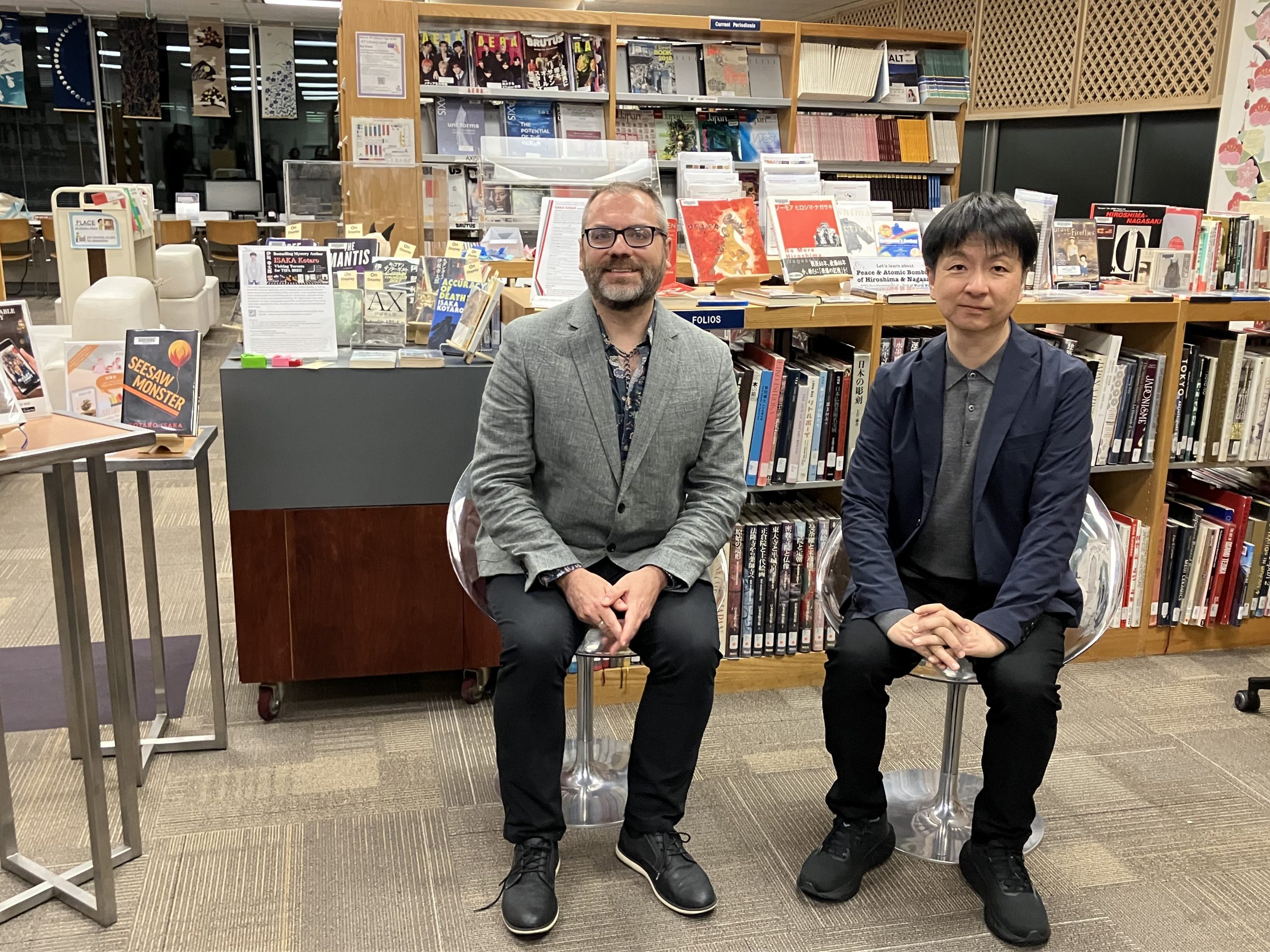
Isaka with Brian Bergstrom (left), English translator of Hotel Lucky Seven
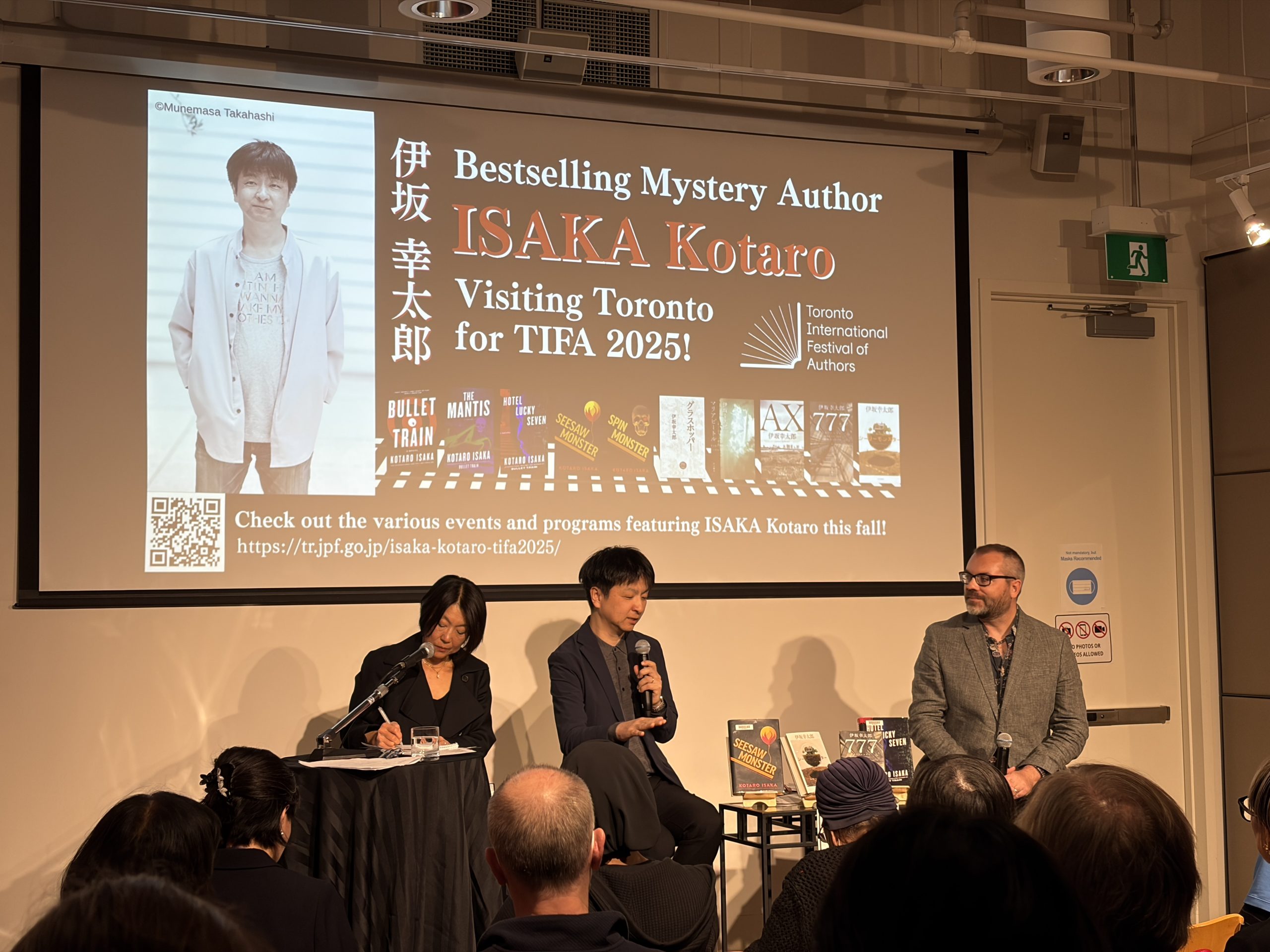
Isaka speaking a discussion hosted by the Japan Foundation, Toronto
-As you mentioned at the Bullet Train screening, your stay in Toronto happened to overlap perfectly with the MLB World Series. Toronto is home to the Blue Jays, who were making their first World Series appearance in 32 years and battling the Dodgers down to the wire—the entire town had Blue Jays fever.
If the Blue Jays hadn’t made it that far into the series, there wouldn’t have been any games in Toronto at all. The timing almost felt like a miracle, really. I had one free day, which I decided to spend taking in Game 6 at Rogers Centre with my agent. It’s a memory I’ll treasure for the rest of my life. My agent is a die-hard Dodgers fan, so he wore a Dodgers jersey—but about 99 percent of the people around us were Blue Jays fans. I was so nervous my stomach was in knots. The people around us were perfectly fine with this, though, and it ended up being a fun, unforgettable experience. Watching Yamamoto Yoshinobu take the mound with boos raining down on him was a really powerful moment; it made me think, “I really don’t have any right to mope about not being able to speak English well enough to buy a drink at a store” (Laughs).
On the same day, I also got the chance to see some incredible sculptures by Henry Moore at the Art Gallery of Ontario. The space was full of these large, supple-looking forms—it was a stunning sight. Works like Moore’s, or Paul Klee’s, which engage you with a friendly, cute appearance only to bring you into something much deeper beneath the surface, really resonate with me. That’s something I aim for in my own writing, too: stories that have a welcoming, easy entrance that even kids can understand but then open up into an expansive world once you step inside. Encountering Moore’s work in Toronto renewed my awareness of this.
-On November 1, the final day of your stay in Toronto, you signed English editions of your books at the Indigo Bay-Bloor bookstore before appearing at the festival’s main event, “Kotaro Isaka: Hotel Lucky Seven & Seesaw Monster,” at Isabel Bader Theatre at the University of Toronto’s Victoria College. The moderator was Toronto-based writer Ji Hong Sayo.
When Ji asked about my path to becoming a writer, I explained that when I debuted in Japan, you generally couldn’t become a writer without winning a newcomer’s prize. I didn’t manage to win one in college, so I figured I’d need a different job after graduation, and went to work as a systems engineer. Fortunately, the president at my company was a kind man who supported my efforts to balance writing with my engineering career, so I kept working with my sights set on becoming a full-time writer. Someone asked during the Q&A which writers influenced me, and I mentioned Oe Kenzaburo and John Irving. I would have mentioned other Japanese authors, too, but I wasn’t sure if people overseas would be as familiar with them as they are with Oe as a Nobel laureate.
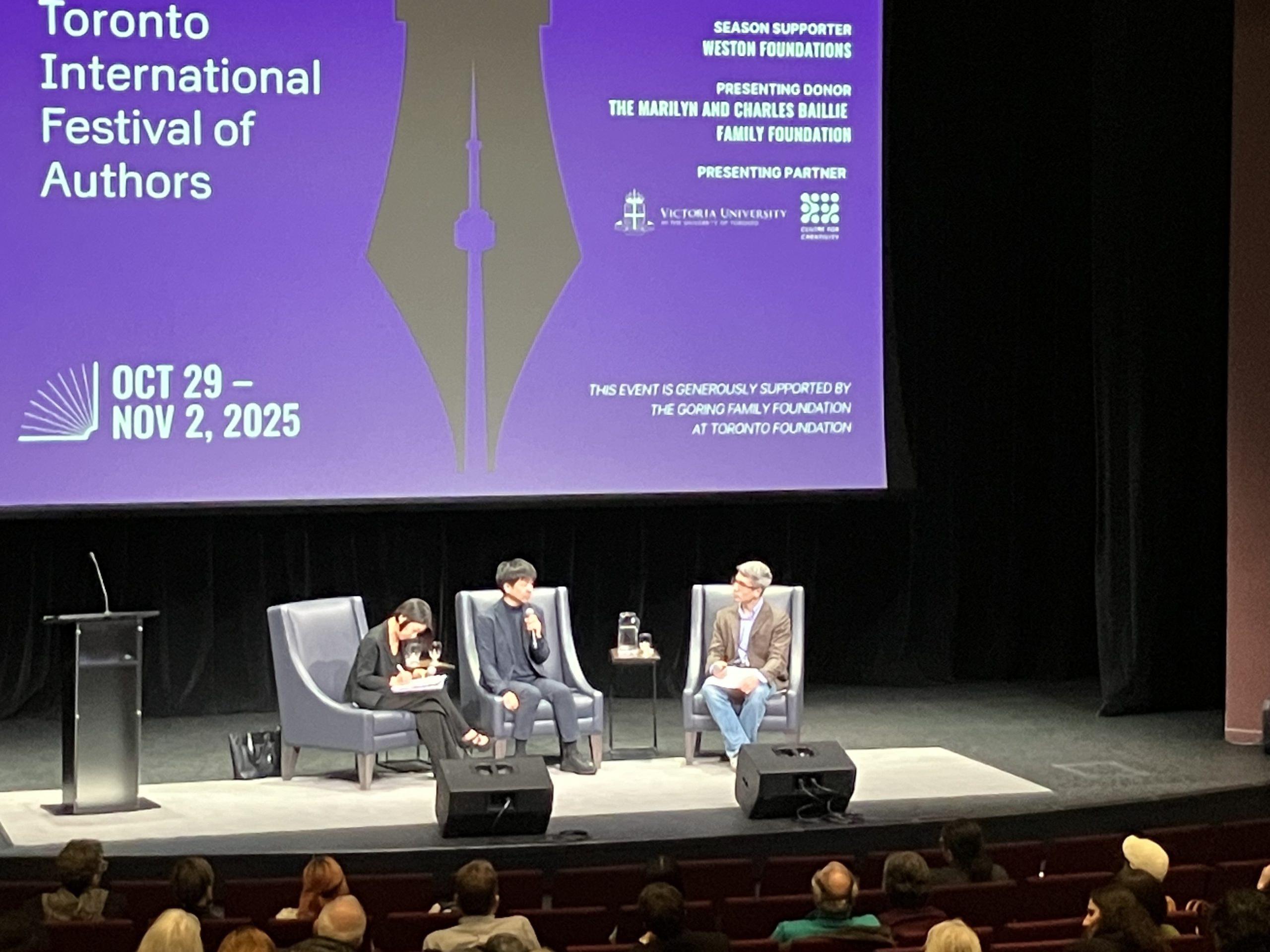
Isaka’s appearance at TIFA
There were also some detailed questions about my work: why I chose a hotel as the setting for Hotel Lucky Seven; how I came up with the idea for the character of Nanao, the protagonist; what led me to combine two stories into one in Shīsō monsutā [trans. Seesaw Monster]; and why I used the legend of the sea people and mountain people to frame the conflict between a daughter-in-law and her mother-in-law. One audience member was curious about how I balance what publishers ask for with what I personally want to write. If there are no constraints at all, I said, my ideas keep multiplying without end—there’s so much I want to write. When a publisher gives me a theme or topic, it actually helps; I can focus within that framework and build the story more easily.
Someone else asked whether I’d ever struggled to keep writing, smooth as my career may have seemed to have gone up to that point. I told them that it may have seemed smooth, but that wasn’t the case at all, and anxiety is a constant for me. But if I ever feel I don’t do well on a book, I just try to improve with the next. Another audience member asked if my experience in the city might ever lead me to set a novel in Toronto. I said it might be interesting to do it—but since my books tend to emphasize the fright factor, I was worried that Toronto’s residents might get upset if I painted it as a place where scary things happen.
Being at the event, with many people in the audience who didn’t know much about me, I felt like I was playing an away game. But they leaned in, listened closely, and laughed at answers sometimes, which put my mind at ease. I’d never been part of an international literary festival before, so it was my introduction to the kind of event where people who genuinely love literature come together because they want to.
-On the final day of your Toronto stay, just as the last event was winding down, something you might call miracle happened during the post-event signing session.
There was a long line of people waiting for the post-event signing, which was a welcome relief. Partway through, a woman stepped up and said something to the interpreter, who then turned to me and said, “This is John Irving’s wife.” At first, I was, like, “What?” I couldn’t even process what was happening. I was stunned. She said, “I was surprised to hear you mention my husband’s name during the talk.” We took a photo together, and I emailed it to her later. She may have just been being polite, but I got a reply: “John was also delighted,” she wrote.
Irving’s novels had a huge impact on me when I read them when I was a college student. I hadn’t realized novels could be like that. In The Hotel New Hampshire, there’s one particular line: “Keep passing the open windows.” I take this to mean something like “Life goes on” or “No matter how many unhappy things happen, all you can do is keep on living.” That way of thinking shaped my own stance: that the serious stuff deserves a cheerier tone. My novels aren’t particularly similar to Irving’s, so I felt kind of sorry for maybe drawing a line that might not have been accurate—but at the same time, writing stories about assassins as entertainment while drawing inspiration from Irving might actually give me my own brand of originality, I suppose. I sometimes tell myself that if I’d written something that felt like a secondhand John Irving, that would have been even more disappointing (Laughs).
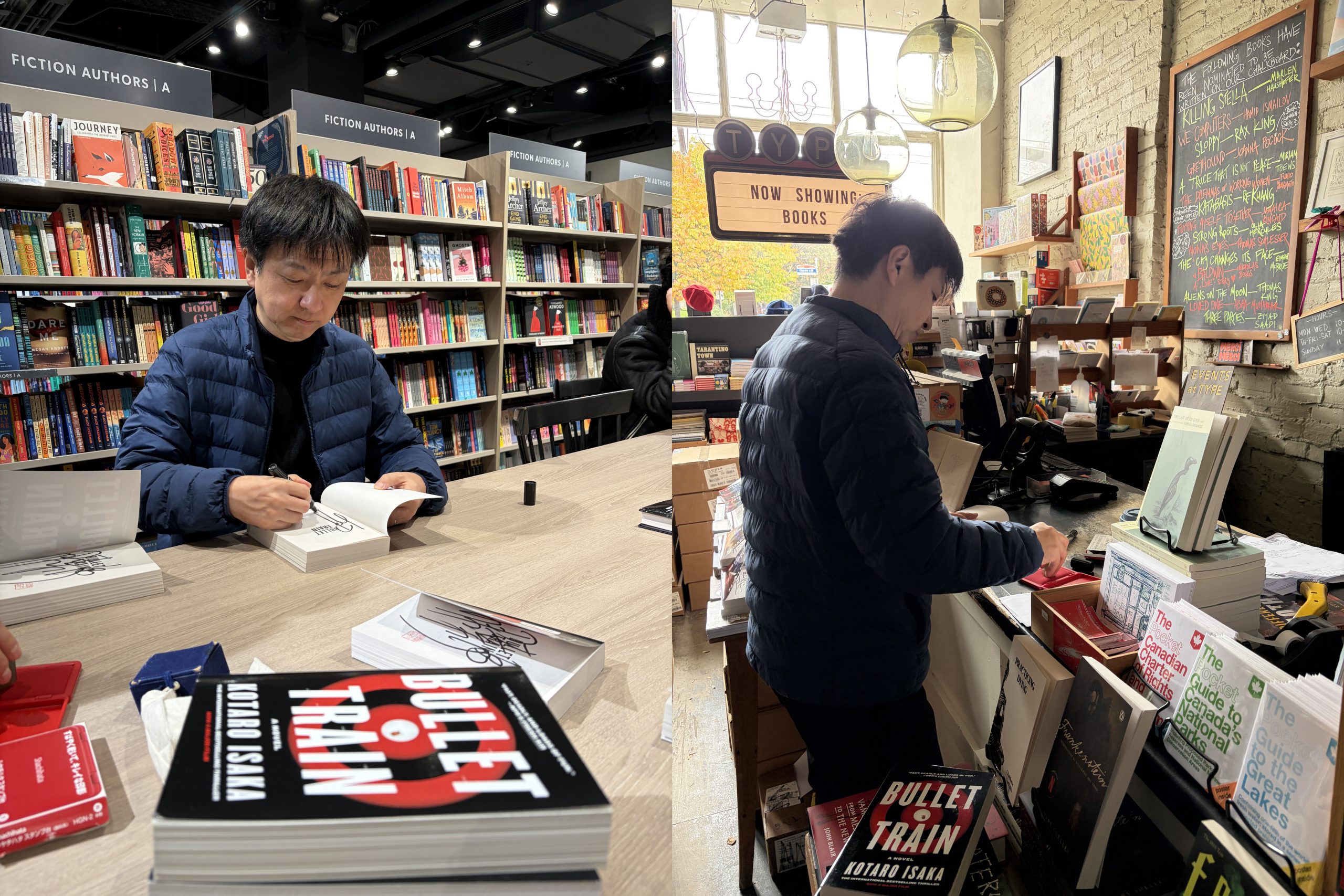
Isaka signing books at Indigo Bay-Bloor and TYPE Books
Before I went to Toronto, I never once imagined that I’d experience a miracle like that in my twenty-fifth year as a writer. I feel lucky to have taken home a moment from this milestone in my life that will carry me forward as a novelist. After meeting Toronto-area readers in person and hearing their thoughts about my work, I started to feel that I should hold events in Japan to meet and thank Japanese readers face to face as well. For someone like me, who’s not much of a traveler, yes, it was physically and mentally exhausting (Laughs). But all in all, I’m truly glad I decided to take the plunge and go.