Connection, Culture, and Respect
Tsujimura Mizuki
Tsujimura Mizuki is a prolific author whose work spans a wide range of genres, from mysteries to coming-of-age stories, family dramas, and fantasy. Among her works, The Lonely Castle in the Mirror, which won the 2018 Japan Booksellers’ Award, has been translated into many languages and is highly acclaimed overseas.
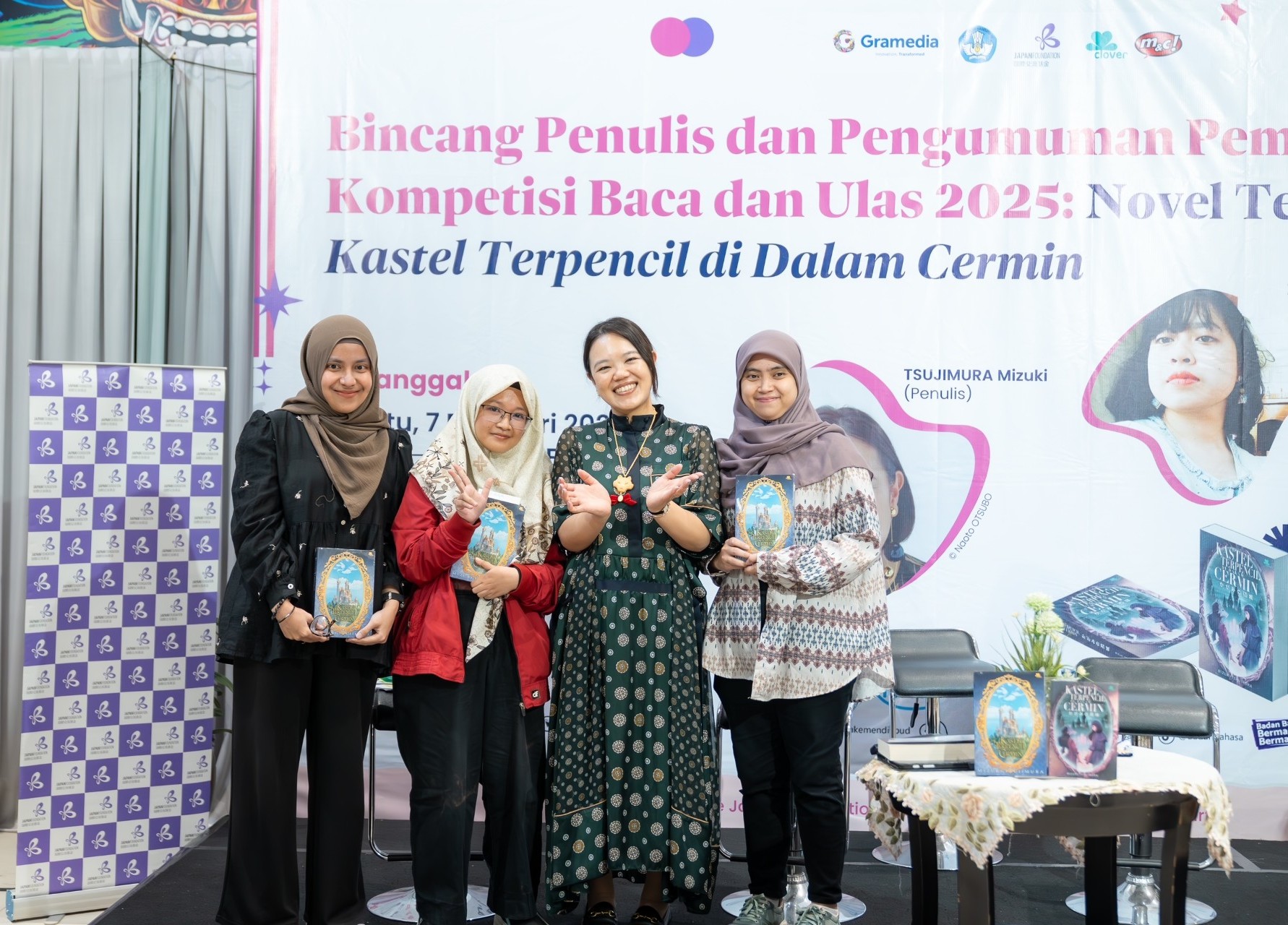
Its Indonesian edition, Kastel Terpencil di Dalam Cermin, published in 2022, has attracted many readers. In 2025, a book review contest for the book was held on Instagram, targeting Indonesian middle and high school students.
Click here to view the Book Review Contest posts.
(Instagram login required.)
In February 2026, Tsujimura visited Indonesia to attend the contest’s awards ceremony in Jakarta. While in Indonesia, she also interacted with students learning Japanese alongside the NIHONGO Partners, and appeared at talk events for local readers in Lombok.
Tsujimura has contributed an essay on her visit to Indonesia, translated for us from the Japanese by Yuki Tejima, translator of Lost Souls Meet Under a Full Moon and How to Hold Someone in Your Heart.
Learn more about the programs in Indonesia here.
Connection, Culture, and Respect
About one year ago, I received an invitation from the Japan Foundation, Jakarta to visit Indonesia.
The Indonesian edition of my novel Lonely Castle in the Mirror (Kastel Terpencil di Dalam Cermin) had been selected for a national book review contest hosted by the organization. I was thrilled to hear that a novel of mine would be read widely by junior and senior high school students in Indonesia, though, I must admit, I was also a little nervous. Lonely Castle in the Mirror is a story that unfolds around a group of junior high school students in Japan. The ins and outs of their everyday lives, from their home environments to the schools they attend, are specific to Japan in many ways, and I wondered how relatable they would be to readers who grew up in a different culture. I was scheduled to fly to Jakarta in February to attend the awards ceremony, but what lay ahead? There was no way to know.
As my departure date neared, the book reviews for the contest, which students were asked to post on Instagram, started to find their way to me. When Miyake Shota of the Japan Foundation’s Jakarta office reached out to say, “Do search the #kombalasjf2025 hashtag,” I only half expected to be able to read the posts, which would of course be in Indonesian.
“Wow!” I exclaimed when I saw what unfolded on my screen. In post after post were illustrations of young women in dresses and a wolf mask—a key character in the novel—and of the book’s protagonist in her Japanese school uniform. Imagery from castles to mirrors and clocks appeared everywhere, making it very clear that these readers had immersed themselves in the world of the novel. Some reviews were posted in video format, with readers animatedly describing the synopsis or sharing their thoughts with friends. The presentations were creative and illuminating, and I was more excited than ever about my trip to Indonesia.
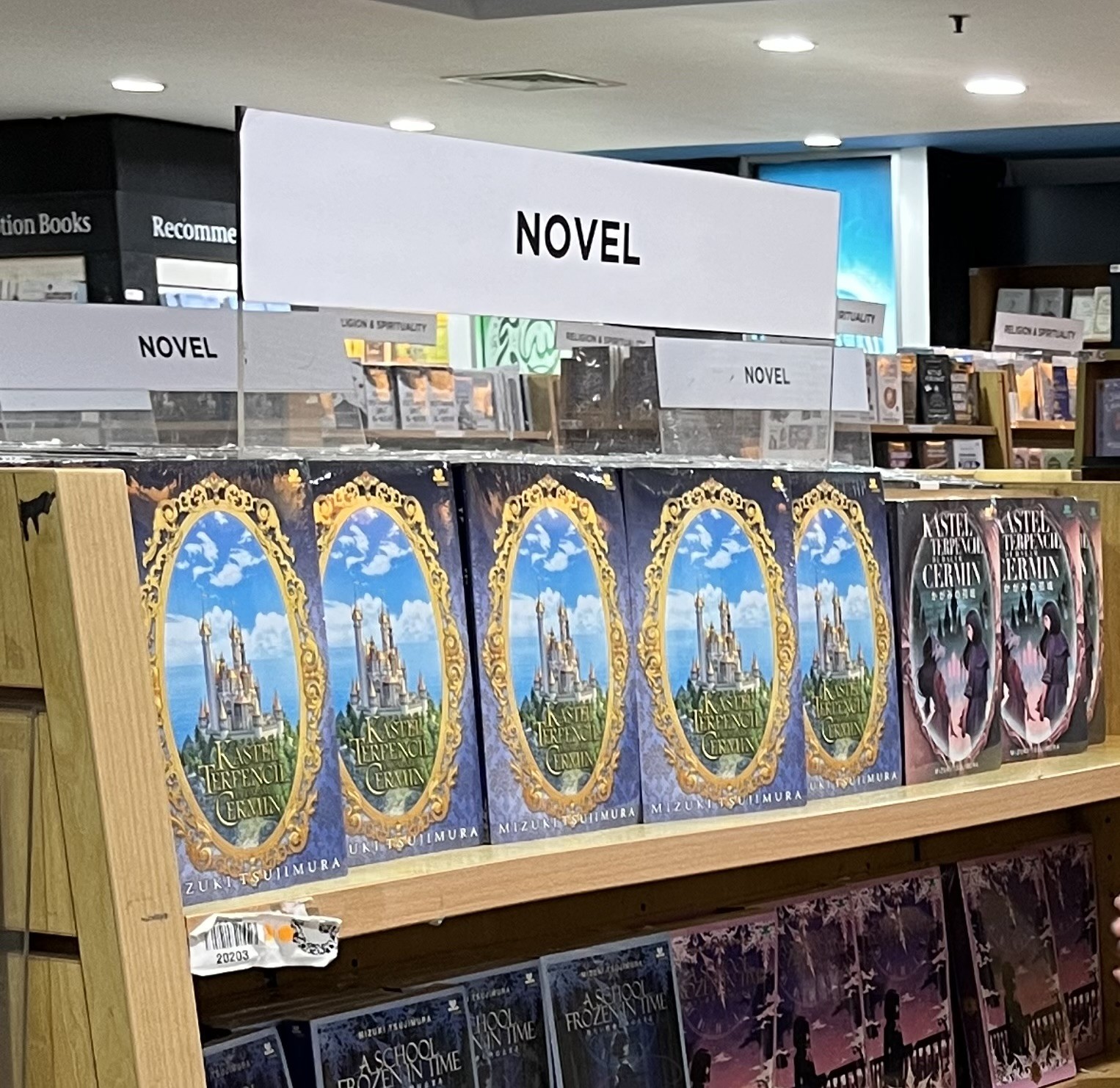
Two cover designs for the Indonesian edition of Lonely Castle in the Mirror
I landed in Jakarta on the sixth of February, about two weeks before the start of Ramadan, a particularly meaningful time of year for Muslims. Indonesia is home to the largest Muslim population in the world, with Muslims making up eighty to ninety percent of the country’s population. During Ramadan, Muslims abstain from eating or drinking from sunrise, around five in the morning, until sundown, about six in the evening. I learned that this practice is meant to cultivate empathy for those who are less fortunate; still, I was stunned to hear that for thirty days, those who observe Ramadan do not even drink water during the day. Coinciding with the days just prior to this holy period, my stay came at a time when the prevailing mood of devotion was especially high.
The book review contest drew participants from over five hundred seventy schools all around Indonesia. At the awards ceremony, I had the pleasure of meeting the staff who helped to run the contest, including Virgie, who would be accompanying me on the planned school and bookstore events.
I also had the joy of meeting Andry Setiawan, who would be interpreting for me at the awards ceremony and other events. I had been looking forward to meeting him in person for some time, ever since I’d first heard, some years ago, about a literary editor in Indonesia who was an avid reader, translator, and publisher of Japanese novels. My novel True Mothers was published in Indonesian by Andry’s company, Penerbit Haru.
After the ceremony I was honored to meet many readers, including the contest winners, and sign their books. Two cover designs were released for the Indonesian edition of Lonely Castle in the Mirror. The original cover features the “Wolf Queen” and main protagonist Kokoro standing side-by-side, while a special edition released by the publisher to overlap with my visit shines a spotlight on the castle. In addition, the Japanese children’s paperback edition had been shipped over in large numbers and was displayed at the front of bookstore. The children’s edition includes the phonetic furigana notation next to each kanji character, which I learned is a handy tool for readers who are studying Japanese—of which there seem to be many in Indonesia!
I was moved by the impressions that readers shared with me, and marveled at how closely their remarks—“I felt like my inner child had found hope,” “I wish a castle like this existed in real life”—resemble comments I’ve received from Japanese readers over the years.
While I was writing Lonely Castle in the Mirror, my deepest wish was for readers to be able to open the book and feel that they, too, belonged in the castle and that they themselves could be friends with the characters. Just as the characters enter the castle through a mirror in their room, readers in Indonesia were opening the book and stepping into the castle, thousands of miles from Japan. One letter I received at the signing session included a beautiful drawing of a girl in a hijab sharing a laugh with the main character. It filled my heart.
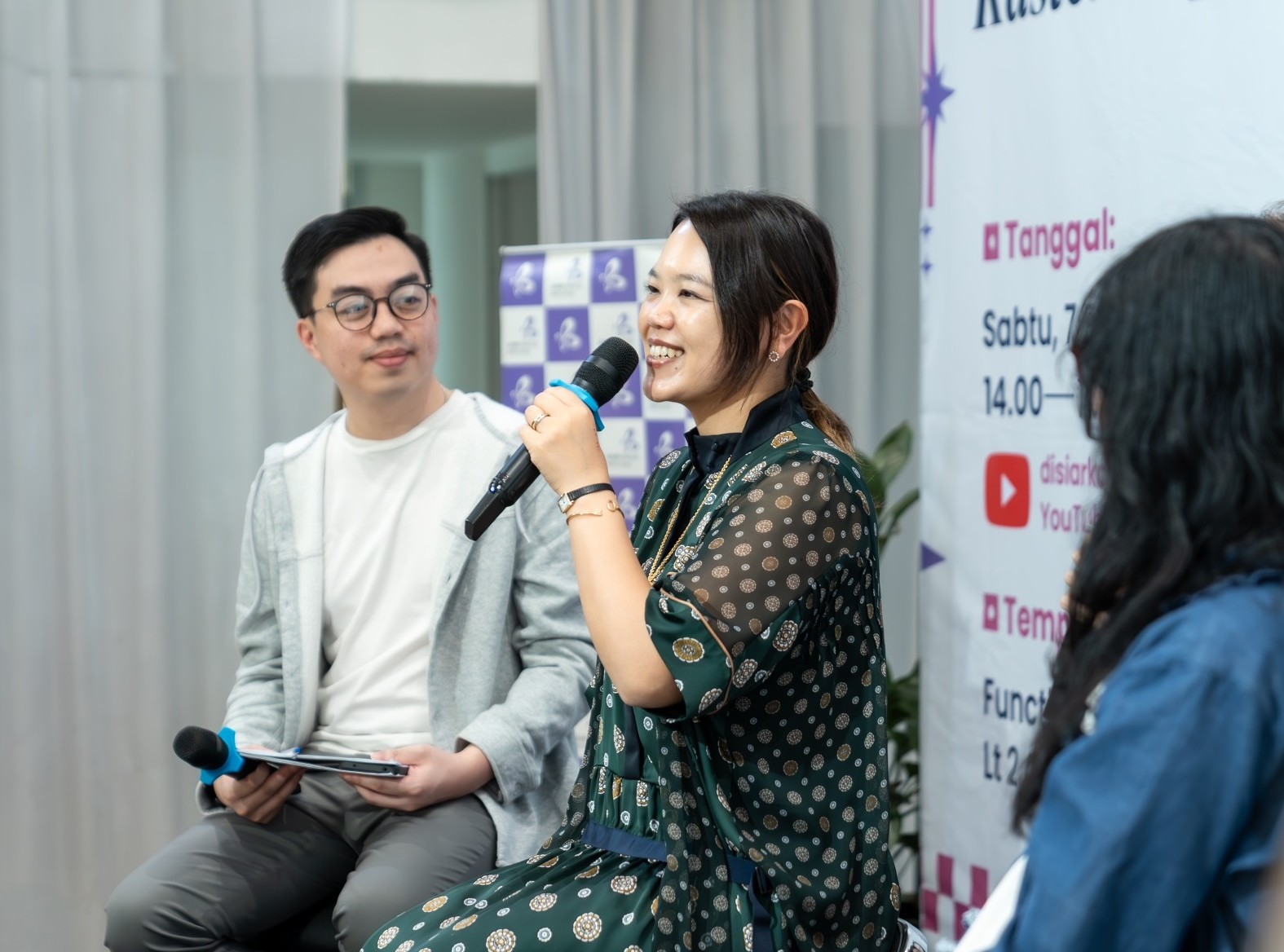
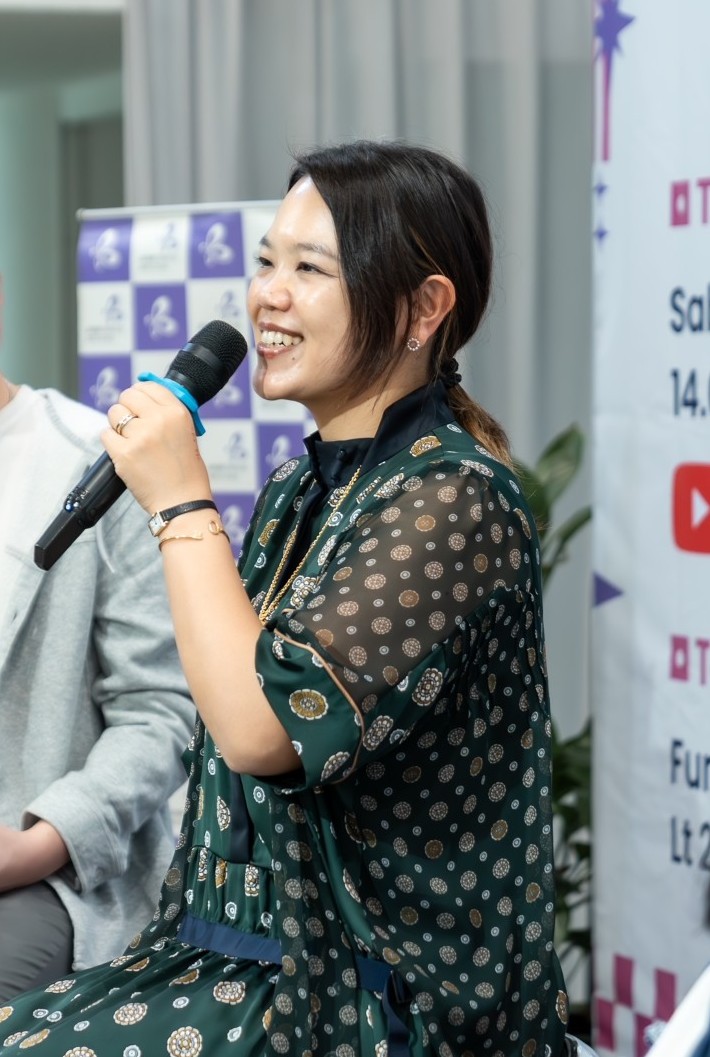
At the event in Jakarta
The day after the awards ceremony, we departed Jakarta and flew about two hours to Lombok Island. Upon arrival at our hotel, Virgie excused herself, saying that she would catch up with me after she prayed in her room. Shortly after, we met up in the hotel café and enjoyed a cup of tea by the sea.
Virgie explained that when prayer time coincides with travel—if she is on a plane, for example—she prays upon arrival at the destination. Similarly, if there are days during Ramadan when people have no choice but to break their fast, they make up for the missed days by fasting at a later date. Hearing this, I am reminded that faith is a choice, an action one takes with intention. How to observe one’s faith is a decision to be made based on what feels natural, rather than something that is done because others are watching.
Lombok Island is a resort destination known for its crystal-clear waters. I take in the breathtaking view and enjoy kopi tubruk, traditional Indonesian-style coffee. Hot water is poured directly over finely ground beans, without filtering, and the grounds allowed to settle before taking a sip. The method is simple yet delicious, and I was instantly smitten.
I had heard we would be visiting a high school that took part in the book review contest and had been looking forward to this day. SMKN 4 Mataram is a vocational school that provides training in tourism, hospitality, culinary arts, beauty, and fashion design. They also hold Japanese classes, I soon learn, as everywhere I go the students greet me with Yokoso! and Konnichiwa! Visiting a Japanese class, I contemplated how best to introduce myself and decided to open with, “I’ve written a screenplay in Japan for a Doraemon movie.” Before my words were interpreted, I could hear a stir in the class over the word Doraemon. “Wow.” “Amazing.” Sugoi. Sugoi. My heart filled once more. It was indeed sugoi. Here we were, a group of people of diverse backgrounds and ages, and we had a “friend” in common before our paths had even crossed. It was quite possible that we knew more about Doraemon than we did about our friends in real life: his favorite food is sweet dorayaki, he lives in Nobita’s closet, he hates mice, and so on. I felt a swell of joy in this moment. Bunka, or culture, had united us.
As my visit neared its end, the culinary students gifted me with handmade sweets, and in the school boutique I purchased clothes that had been made by the fashion students. We said goodbye and piled into the car to head to our next stop. Along the way we stopped by a supermarket where Andry showed me a fruit whose rind looked just like snakeskin. “Have you seen this before?” Called salak, and also known as snake fruit, it was much easier to peel than I’d guessed from its appearance. Andry bought a few for us to try and we enjoyed them in the car—they were delicious. As we rode along, I pointed out of the window and asked, “What’s that?” “And that?” My fellow travelers kindly explained, and before we knew it, we had arrived at our next destination.
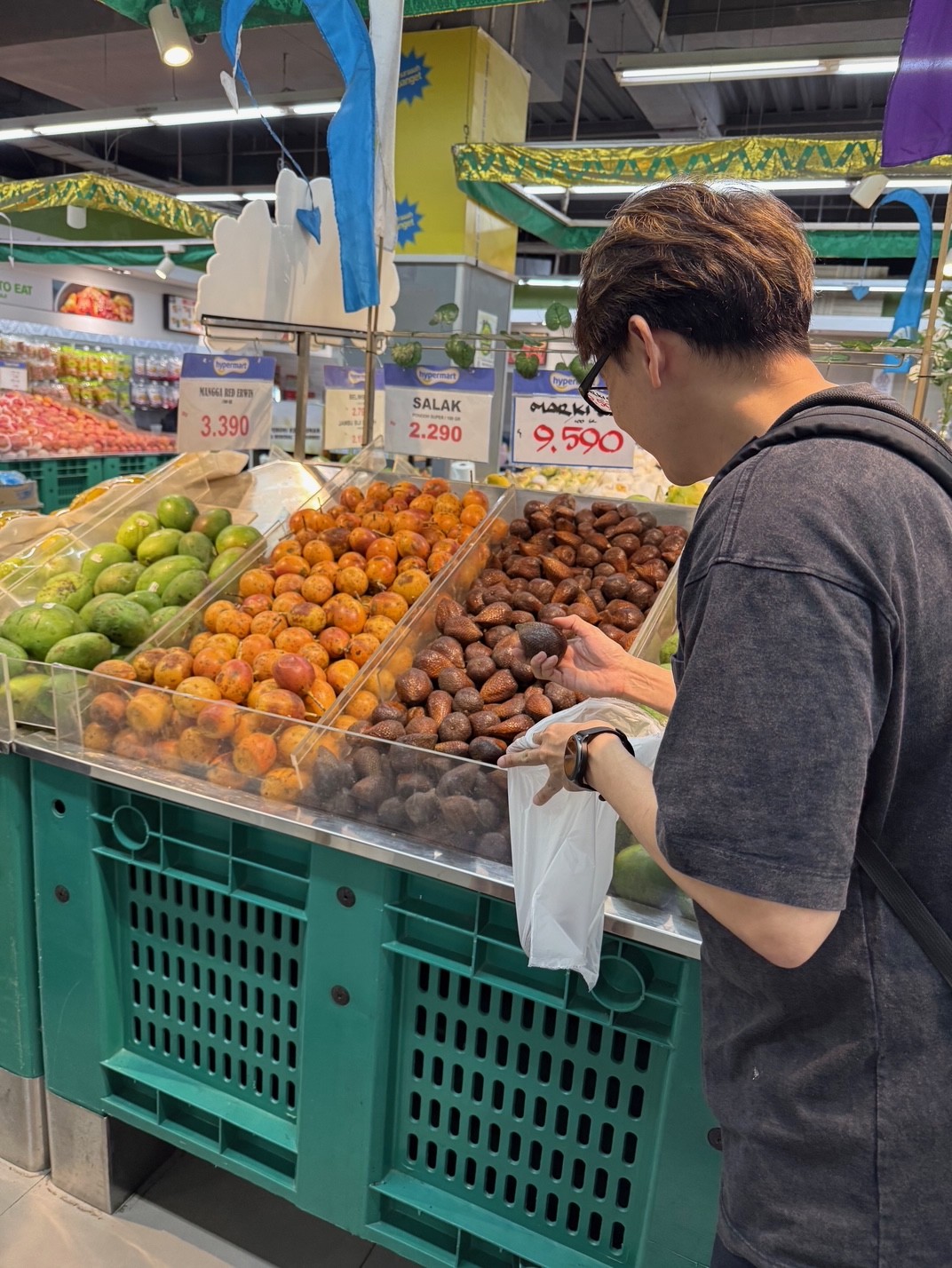
Andry and snake fruit
This event was being held in a bookshop on the island and was made possible with the help of a local literature group. I learn there are many social groups like this in Indonesia, made up of members with shared interests and hobbies. Our event moderator Dwi shared that he belongs to a free-diving club in addition to the literature group.
The literature circle is made up of book lovers of all ages and occupations, and includes college students, newspaper reporters, and schoolteachers, many of whom write their own poetry and novels. Seeing the books they had created, I was moved by the group’s passion for reading and writing. One member shared that he reads a lot of Japanese manga. “Do you have any favorite titles, Tsujimura-san?” I listed a few, and his face lit up when I mentioned Attack on Titan. He grinned and said in Japanese, Oyasuminasai, Eren (“Goodnight, Eren”) just like in the anime.
His pronunciation was perfect. Over the course of this trip, I had secretly been in awe of the Japanese I’d heard at book signings and class visits. It appears that many people have become acquainted with the language through their love of anime.
“I’ve seen the Attack on Titan series at least three times,” he told me. “But it’s such a long series!” I exclaimed. He laughed and replied, “I watch it every year during Ramadan.”
In addition to fasting and self-discipline, Ramadan is also a time for loved ones to gather around the table after sundown to share meals. Intense devotion and community ties are treasured in equal measures over the thirty days, and observers can also carve out time for themselves during the day, rising before dawn or ending the workday early.
“I’m excited to think it’s almost time for me to watch it all over again.” Seeing him smile, I sighed in understanding. His words resonated deeply with my own experiences as a reader over the years.
This trip had opened my eyes to the reach and impact of culture, but this. This is what it’s all about, I thought. Stories that have the power to captivate an audience soar over borders, settling into local life and becoming a part of someone’s everyday existence.
The next morning I took a walk to a sea turtle conservation center near our hotel. New hatchlings are nurtured at the center until they are stronger and stand a better chance of surviving in the wild. I watched the baby turtles swim around in the tank, then lifted my gaze to see Bali in the distance. The view was a beautiful reminder of the vast number of islands that make up Indonesia.
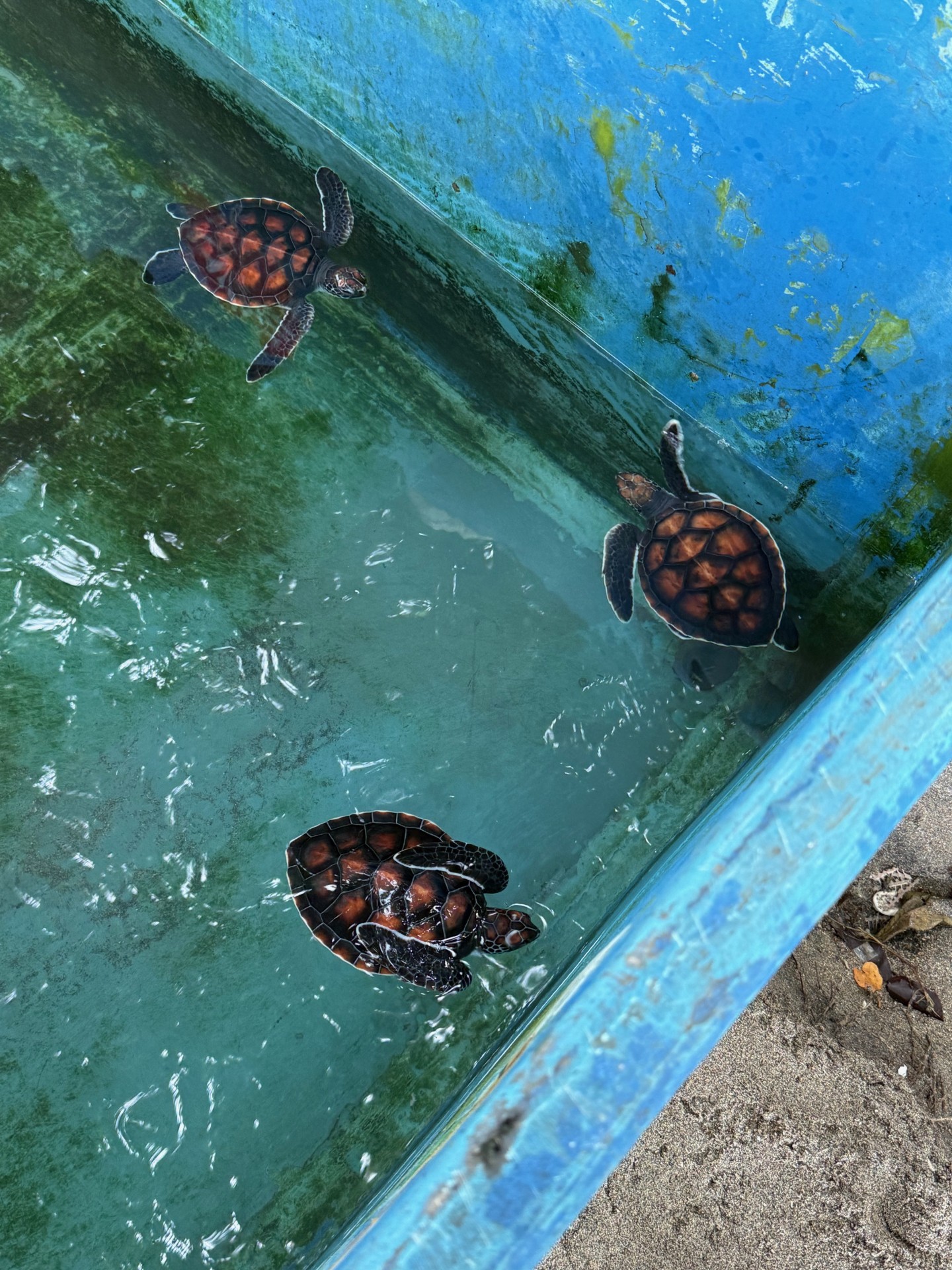
New hatchlings
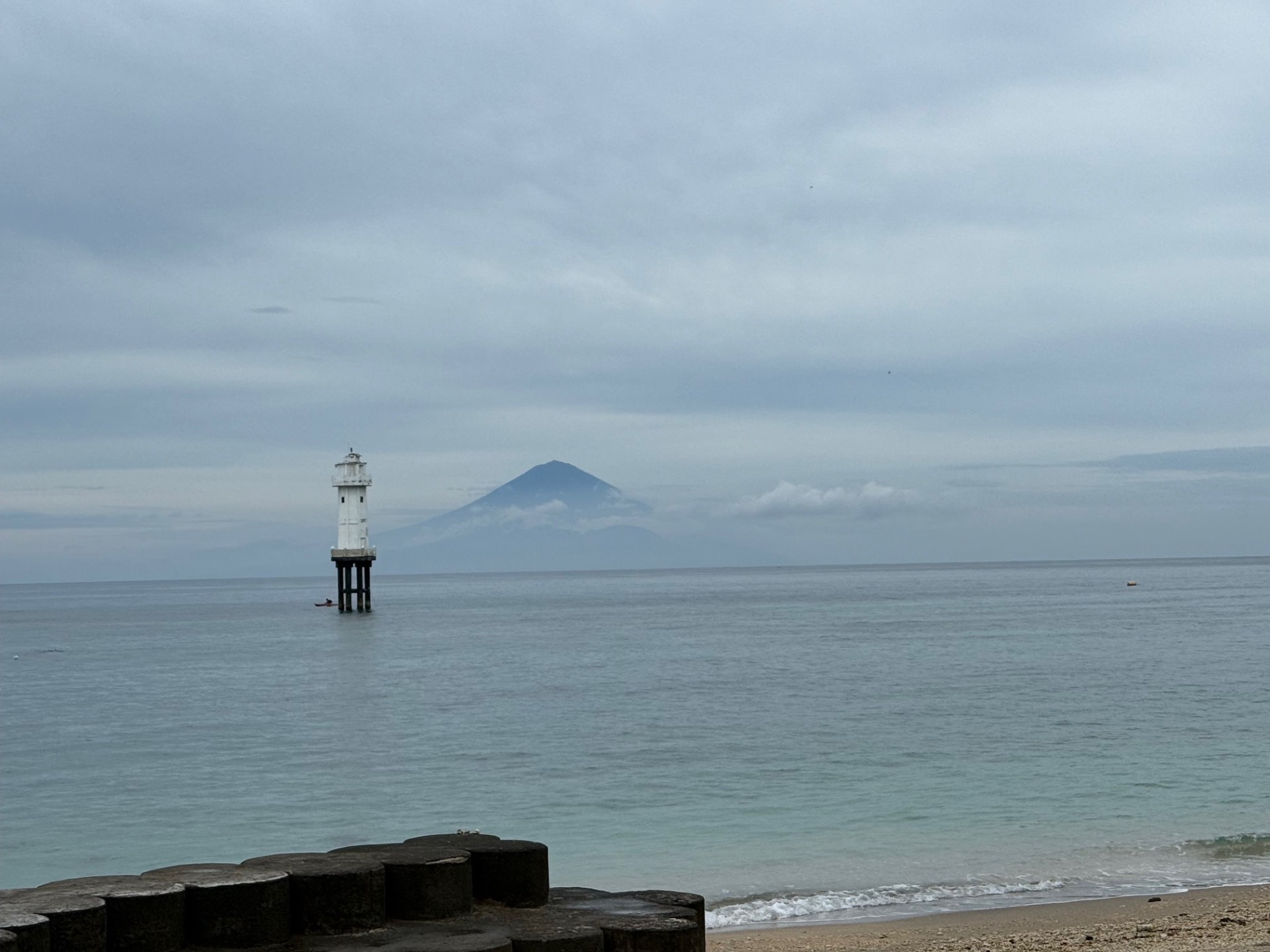
View of Bali from Lombok
I had visited the country once before, about twenty years ago when I vacationed in Bali. Swimming leisurely in the aquamarine waters was wonderful, but this trip has proven to be countless times richer, thanks to everybody at the Japan Foundation, as well as the readers of my books, who stepped in to interpret not just language, but the culture. They helped to translate the things I saw and touched from their perspective to mine, deepening my experiences all the more.
When Virgie, with whom I had spent several days, stepped out for prayer, I no longer viewed the custom as that of a different country. This was the shape of Virgie’s faith, a daily ritual that was essential for my friend. Listening to the sounds of the ocean waves, I reflect anew on a familiar word: respect. To respect one another—I ruminate on the word, which I imagine must have been born in moments like these. Over the past few days, I have been the grateful recipient of such regard shown toward me and my books, by the Indonesian people who place great value on diversity.
Basking in the warm sunshine of Lombok Island, I hoped that I too will one day be able to translate for others in the same ways that I had been shown on this trip. As a writer whose job is to convey experiences using words, I feel I was invited to Indonesia for a reason and might even say it filled me with a sense of mission.
I am deeply grateful for this opportunity to see and experience Indonesia.