I Dreamed I Was a New Writer Again
Nishi Kanako
Since its publication in 2005, Nishi Kanako’s first full-length novel, Sakura, has long been regarded as one of her notable early works and was adapted into a film in 2020.
Now, more than 20 years later, its English edition, published in March 2026, is attracting new readers. To celebrate her “debut” in the English-speaking world, Nishi went on a tour visiting eight cities, starting in Boston and continuing to New York, Washington, D.C., Los Angeles, San Francisco, Portland, Seattle, and Vancouver.
“There was no greater thrill for me than having the chance to meet so many people in what are my favorite spaces—bookstores,” says Nishi. What did she encounter on her journey to connect with readers across North America?
Read Nishi’s own reflections from the tour, translated for us from the Japanese by Sakura translator Allison Markin Powell.
Learn more about the tour in North America here.
I Dreamed I Was a New Writer Again
My novel Sakura was published in 2005. At the time, I was living in Tokyo and working a part-time job. While I had published a collection of short stories, Sakura was my first long-form work. It launched my career and enabled me to call myself “a writer,” albeit a rookie one. I still vividly recall the first time I saw stacks of that novel in bookstores. It really did feel like I was dreaming.
Now, more than twenty years later, this same book has been brought into English by an amazing translator and equally amazing publisher—creating the chance for another debut. Moreover, a grand tour to eight cities was arranged, where I would get to engage with readers in Boston, New York, Washington, D.C., Los Angeles, San Francisco, Portland, Seattle, and Vancouver.
I had met my translator, Allison Markin Powell, more than ten years earlier. Being introduced to her was an absolute stroke of good fortune for me, whose dream had long been to have my writing translated into English. As it turned out, the path to publication would prove to be a long one, but, thanks to Allison’s extraordinary efforts, and later to my trustworthy literary agent Emily Chuang, and my amazing editor Alexa Frank, and most of all to the path blazed by so many Japanese authors before me whose books have appeared in translation, my dream was finally realized.
Of course, I myself had changed over those years, and the world more so. Looking at the United States nowadays, I had to admit I was anxious about travelling there, plus there was a certain cringe factor that Sakura had been written more than twenty years ago. (I likened this to the experience of having someone read your diary from two decades ago.) Still, more than anything, I was excited by the prospect of meeting a fresh group of readers as a “new” Japanese writer.
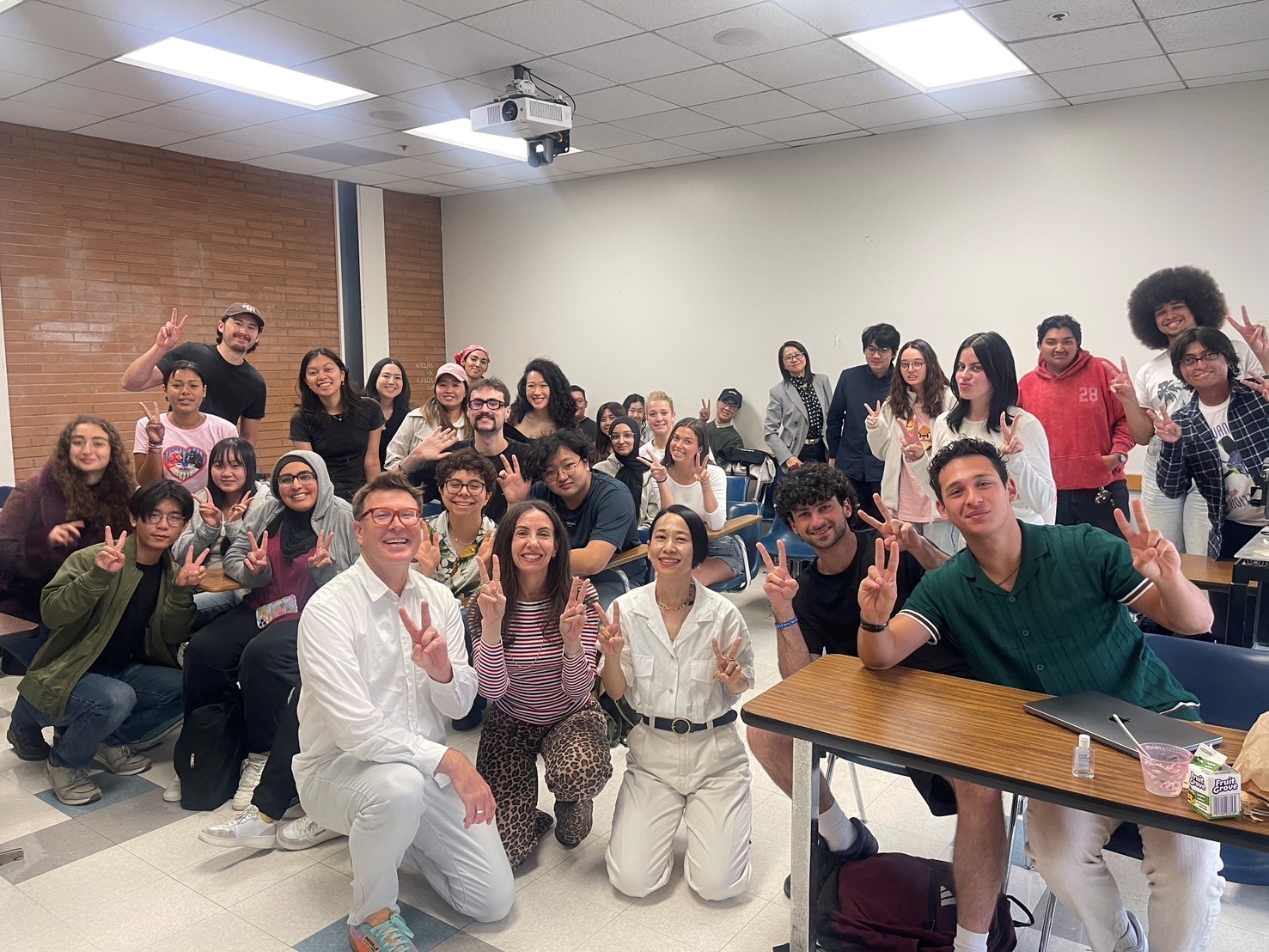
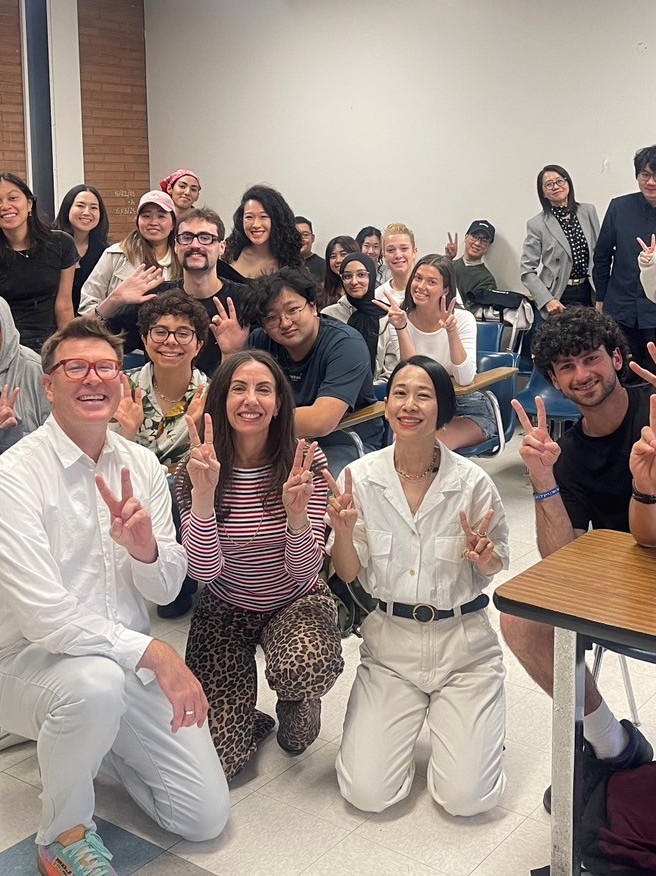
Class visit at UCLA
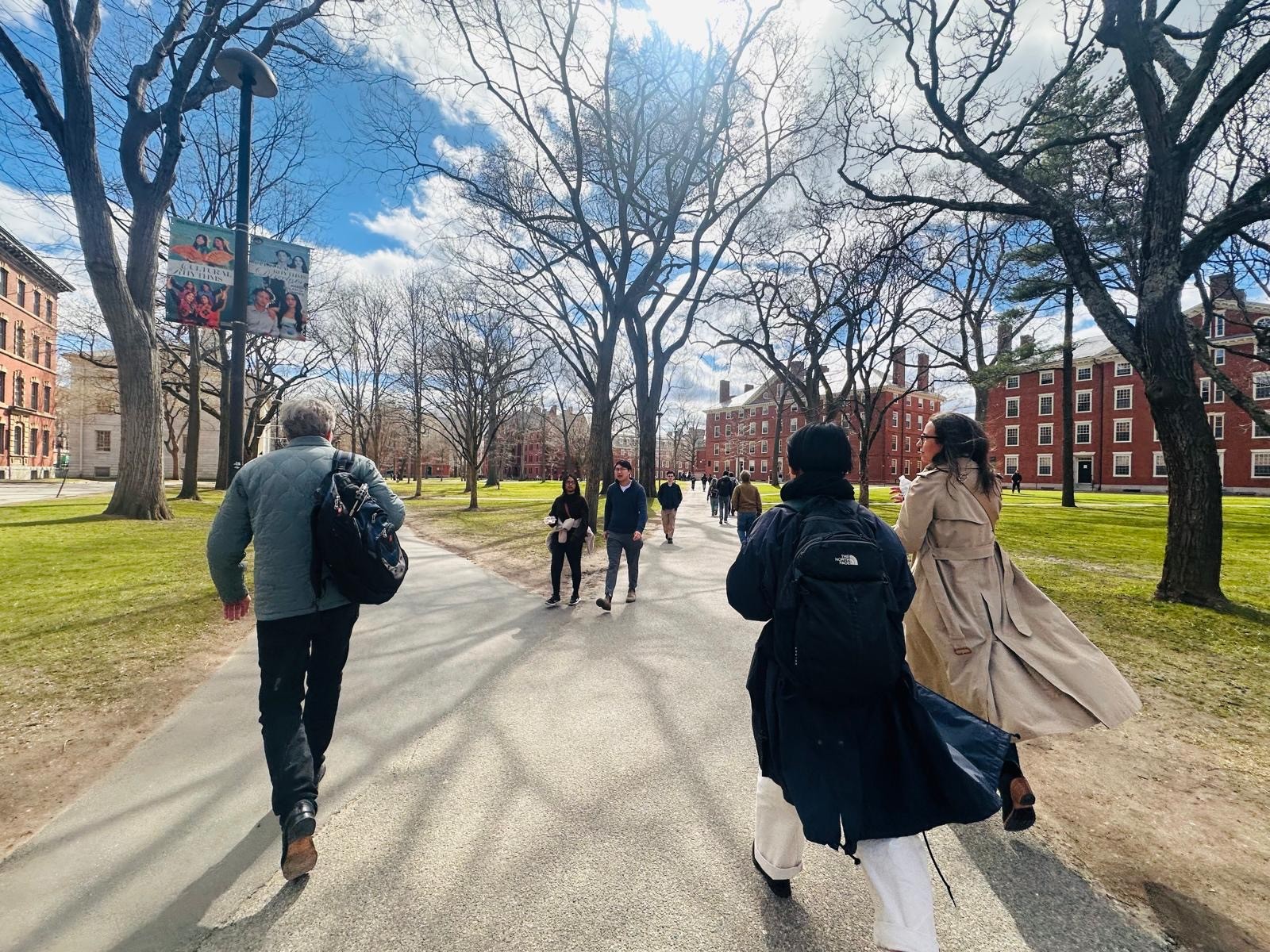
Harvard University
The tour started in Boston. Our first event would be a class visit at Harvard University. Never in my wildest imagination did I see myself attending a class at Harvard. Not to mention the fact that, in my mind, Harvard was no longer just a university—it had gained even more, or different, notoriety due to recent events. And yet, even amid the controversies, the students remained focused on going to class and doing what was expected of them, which I found very moving.
The other universities we visited were UCLA, Stanford, and UBC. I had all kinds of conversations with students from all kinds of places and backgrounds. Of course, it’s impossible to really know much of anything about them from the abbreviated encounters we had, but I came away with a sense of their fierce desire to learn—which I think ought to be protected by all means—and it pained me to hear stories about budgets for the humanities being slashed. In a world that’s ever-more focused on rational thinking and swift action, it’s essential for us to take the time to sit on our own and turn the pages of a book. We have the right to slow and quiet time, when we can be alone with ourselves.
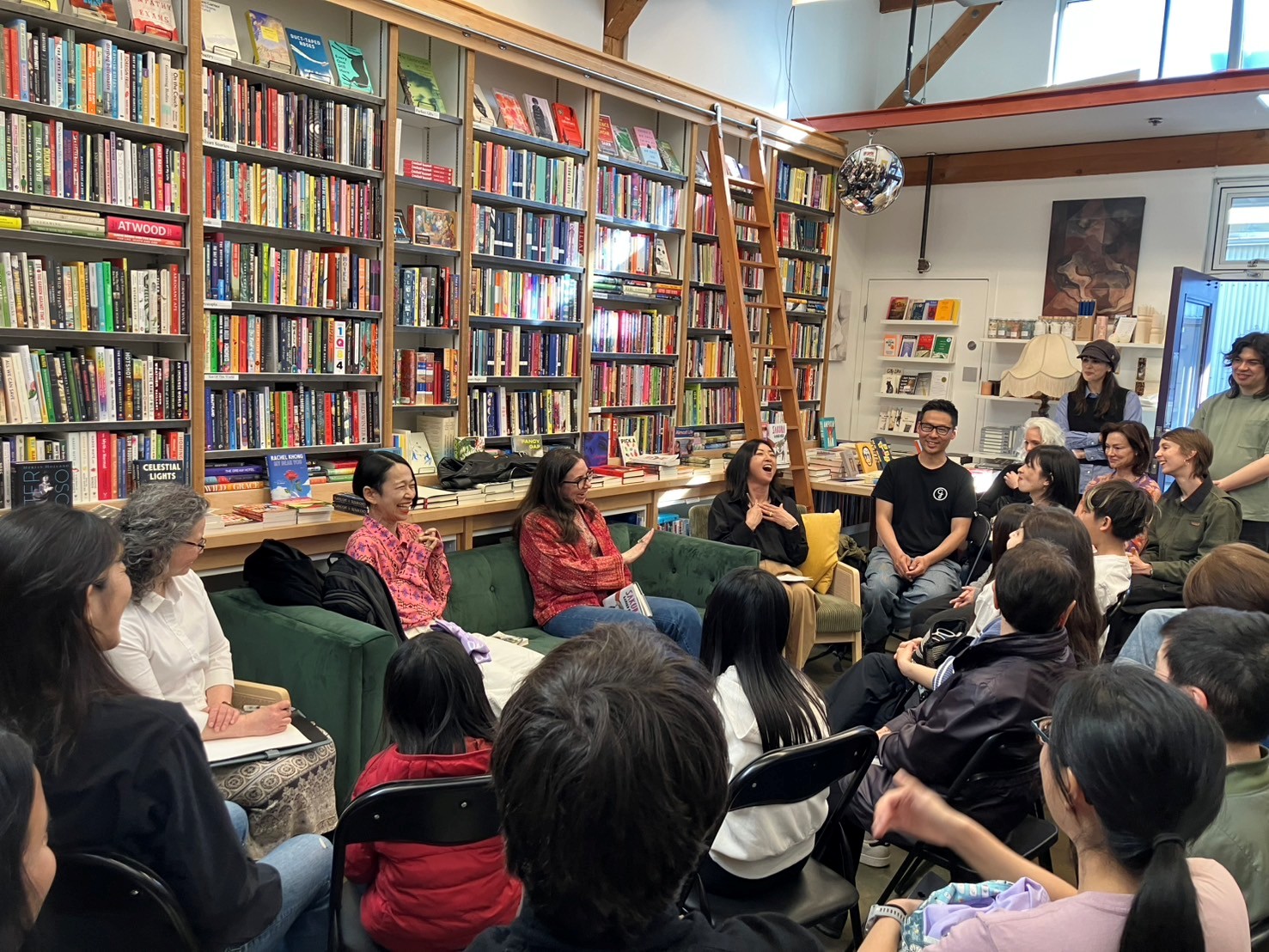
At Upstart & Crow, a bookstore in Vancouver
And so, there was no greater thrill for me than having the chance to meet so many people in what are my favorite spaces—bookstores. I love standing in front of shelves where I can find stories from all over the world, and I was delighted and impressed to see a whole host of Japanese writers there—no longer set apart as “Books by Foreign Authors,” but rather included among “Amazing Books You Should Read Now.”
Every event was packed, thanks to Allison and everyone at the Japan Foundation. What a pleasure for a debut author—truly!
And then there were the audiences, nodding along and laughing and at times showing their surprise unabashedly. At literary events in Japan, attendees will watch and listen attentively, but in North America, I had the sense that people were really engaged. There was an endless stream of questions. About Kansai dialect, about onomatopoeia, about what Japan was like when I wrote the novel, about works by Japanese writers that are now being read all over the world. I would say something in Japanese, and some of the people in the room would laugh, and then when my words were interpreted, other people would laugh. These time-lags that sprung up during bilingual events were some of the sweetest moments, for me at least.
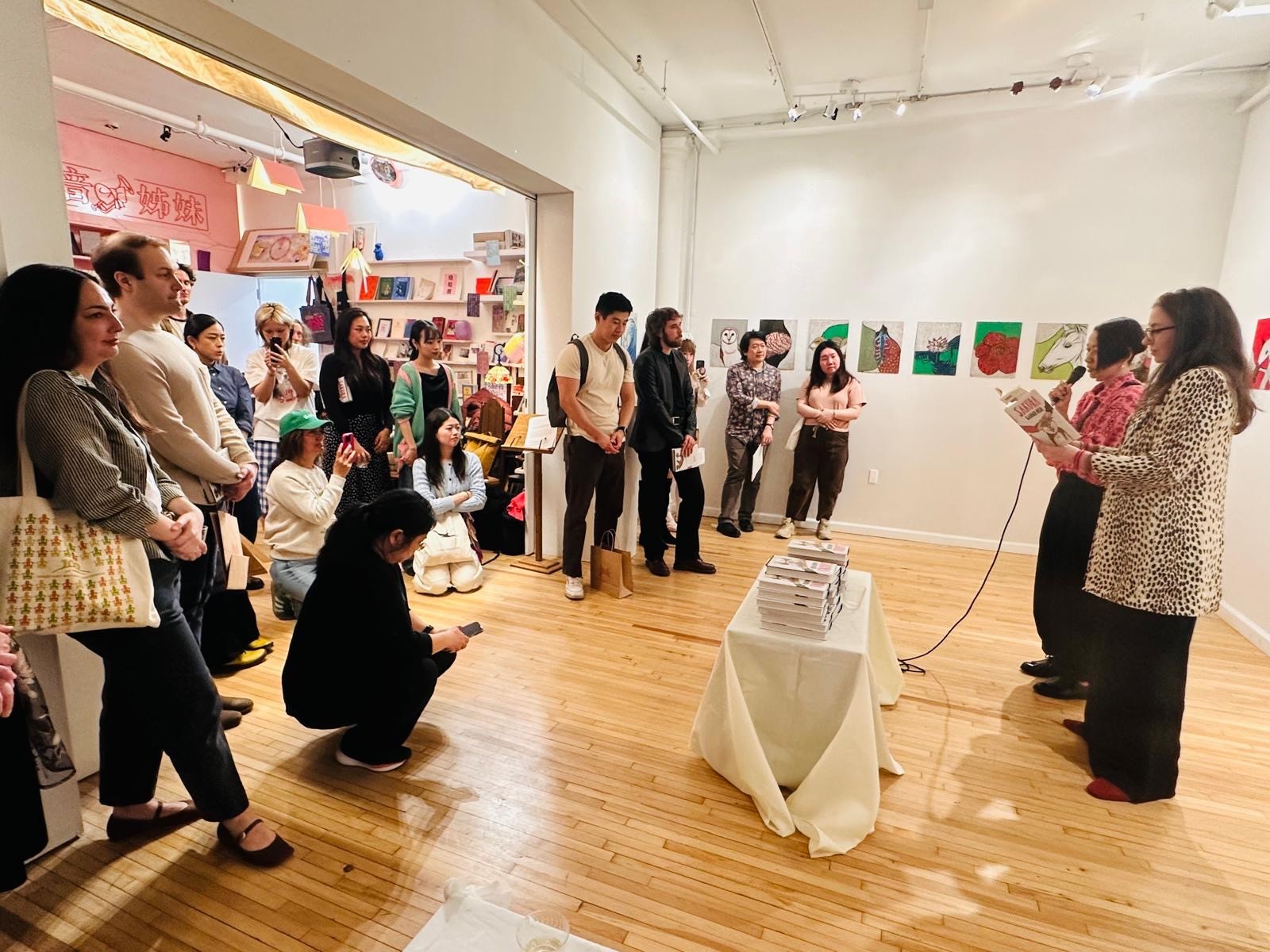
At Accent Sisters, a gallery in New York
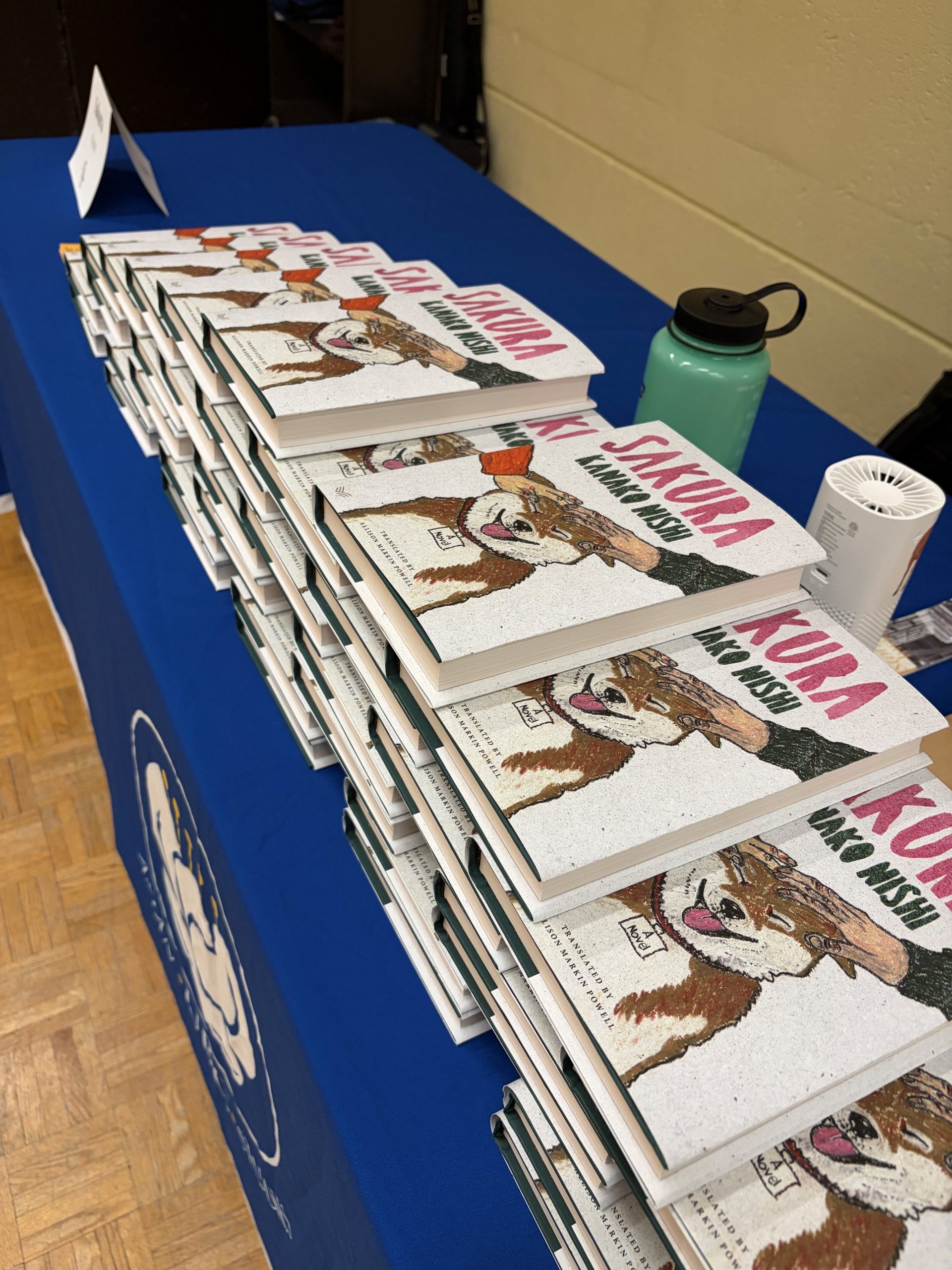
The English edition of Sakura
I was also reminded of just how incredible interpreters are. I’m deeply grateful to the people who interpreted for me throughout the tour and I remain astonished by their ability to process two languages (especially Japanese and English, whose syntax and grammar are so different) right there on the spot, transforming one into the other articulately for a live audience. I was particularly impressed by the way they were able to capture the nuances when I would get worked up and lapse into Kansai dialect. This was not about simply knowing the language—such facility would be impossible without deep cultural familiarity as well. I want to express my appreciation again for all of my interpreters: Chris in Boston; Mari in New York; Sanae in Washington; Jordan and David in Los Angeles; Rosaley in San Francisco; Nobue in Portland; Kasumi in Seattle; and Ikumi and Maiko in Vancouver. I’m truly thankful.
There were many Japanese speakers and readers at the events. It was such a treat to be able to talk with them, even for the briefest of moments. Other than the challenges of Japanese ex-pat living, we chatted about how they got to where they are, the cultural differences they found surprising, and even the meals they cook at home. Had we been somewhere other than a book-signing, these women and I might have talked for hours without running out of topics—this too struck me as different from what it’s like when I do events in Japan. While I only lived in Canada for three years, I have an inkling of what they’re going through—missing things like thinly sliced meat, mozuku seaweed, and going to hot springs.
But by far the happiest moments were when they held out their tattered copies of my books, saying that they’d brought them from Japan.
I can appreciate ebooks and audiobooks for the convenience they offer, but my preference will always be for printed books. I want to be able to touch them, to smell their pages, and, most of all, to feel their heft. When I was a student, I used to carry John Irving’s intricately woven stories and Toni Morrison’s beautifully wrought words back and forth to school with me. Maybe those memories—of the way different stories carry different weights—are why they’ve become so important to me. One of the reasons for my deep attachment to those heavy books is the fact that they actually do take up space. My studio is inundated with books, and yet, even if someone offered to consolidate them all into data for me, it’d be an easy “no” for me. Yes, books weigh a lot. Yes, books take up space. That’s precisely why I love them. The same way that people have weight and, it goes without saying, that we take up space too.
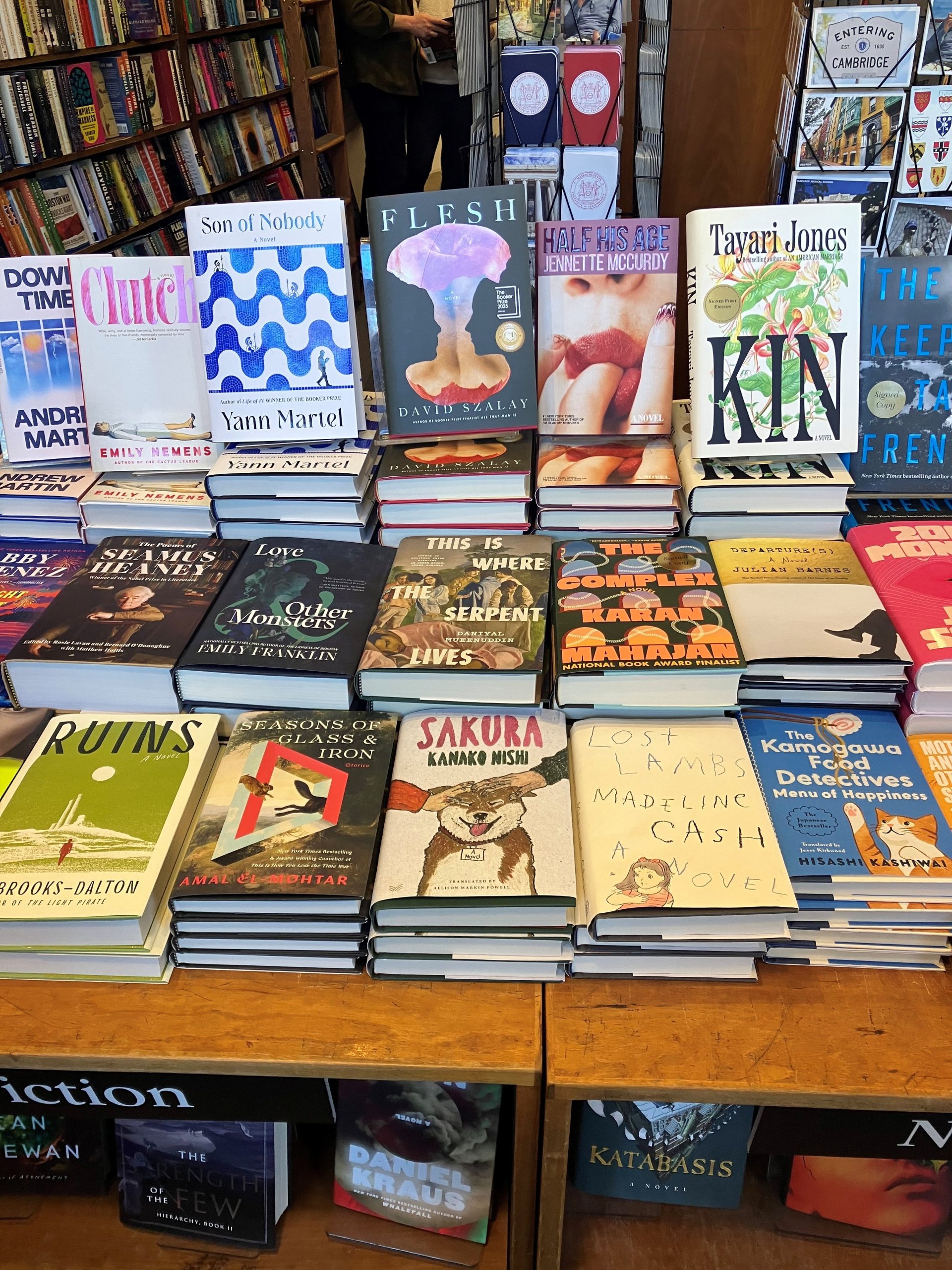
The women who came to my events had carried the weight of my books with them all the way to North America. They had made room for them. And now, here they were, creating more space for Sakura in English.
That meant more to me than when, as a new writer in my twenties, I had first seen my novel stacked up in bookstores in Japan. When I think of my books over there—in people’s homes and on the shelves of bookstores in countries that are not my own—would it be an exaggeration to call that a miracle? I can’t think of a better way to describe it.