
Literary Translation in Southeast Asia:
Translators Address Their Livelihoods, Readership, and Future (Part 1)
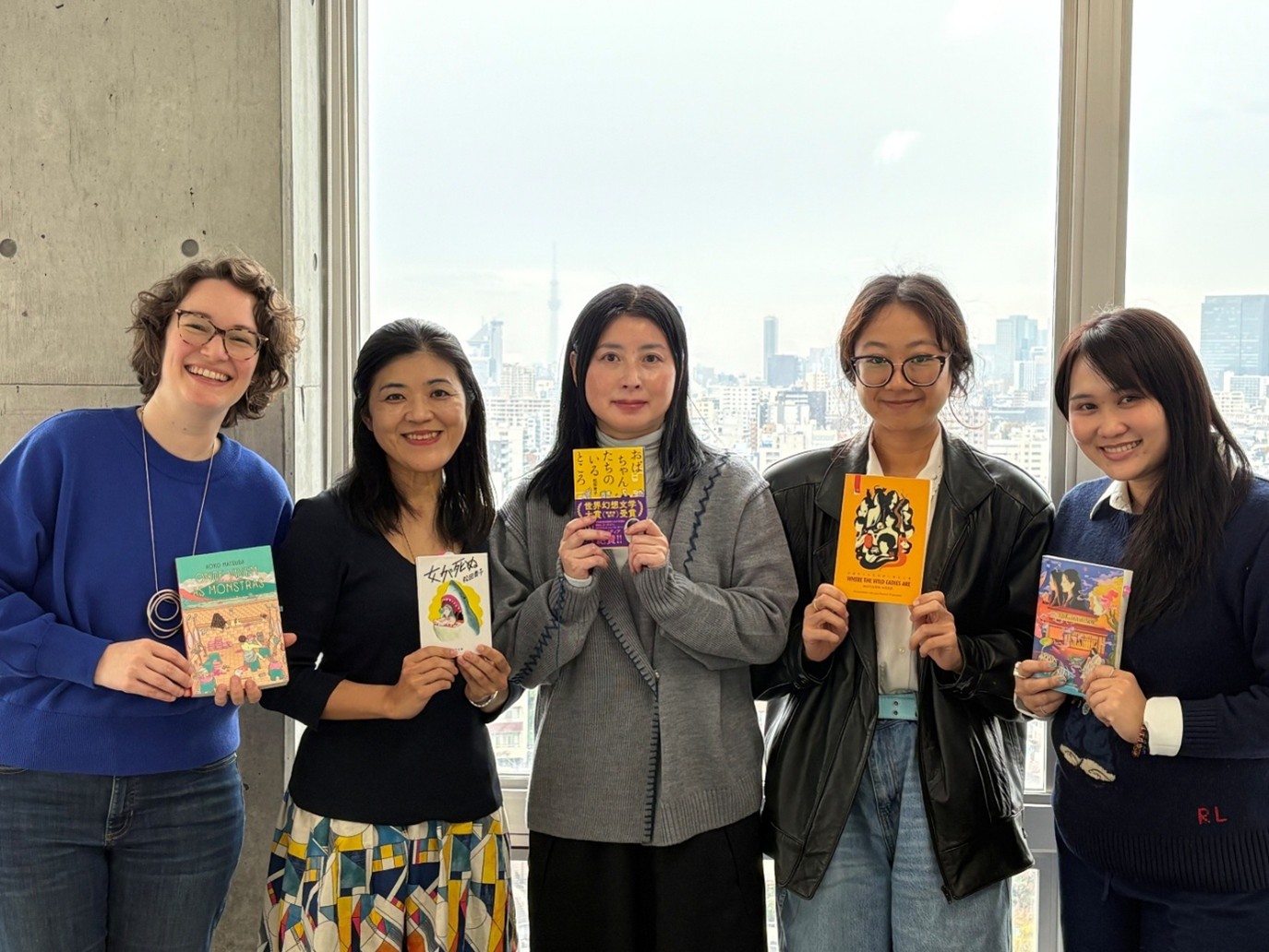
In November 2025 the Japan Foundation hosted a visit to Japan by five translators and four editors of Japanese literature based in Indonesia, Thailand, Vietnam, Malaysia, and Myanmar. For more information about that professional exchange, see here.
As part of that program, a roundtable discussion entitled “Literary Translation in Southeast Asia: Translators Address Their Livelihoods, Readership, and Future” was held on November 22.
Participating were the following five translators:
- Andri Setiawan (Indonesia)
- Asri Pratiwi Wulandari (“Wulan”) (Indonesia)
- Mohammad Basil Hazman bin Baharom (Malaysia)
- Geywalin Likhitvidhayavuth (“Meen”) (Thailand)
- Luong Viet Dung (Vietnam)
Moderated by Fukutomi Sho, a Thai literary researcher and Thai–Japanese translator, the discussion explores the participants’ paths into literary translation, the challenges of balancing translation work with everyday life, and the current state and publishing trends of Japanese literature in their respective countries. How did these translators first enter the world of translation, and how have they sustained their careers? In the first part of this report, we present highlights from their conversation.
Click here for Part 2
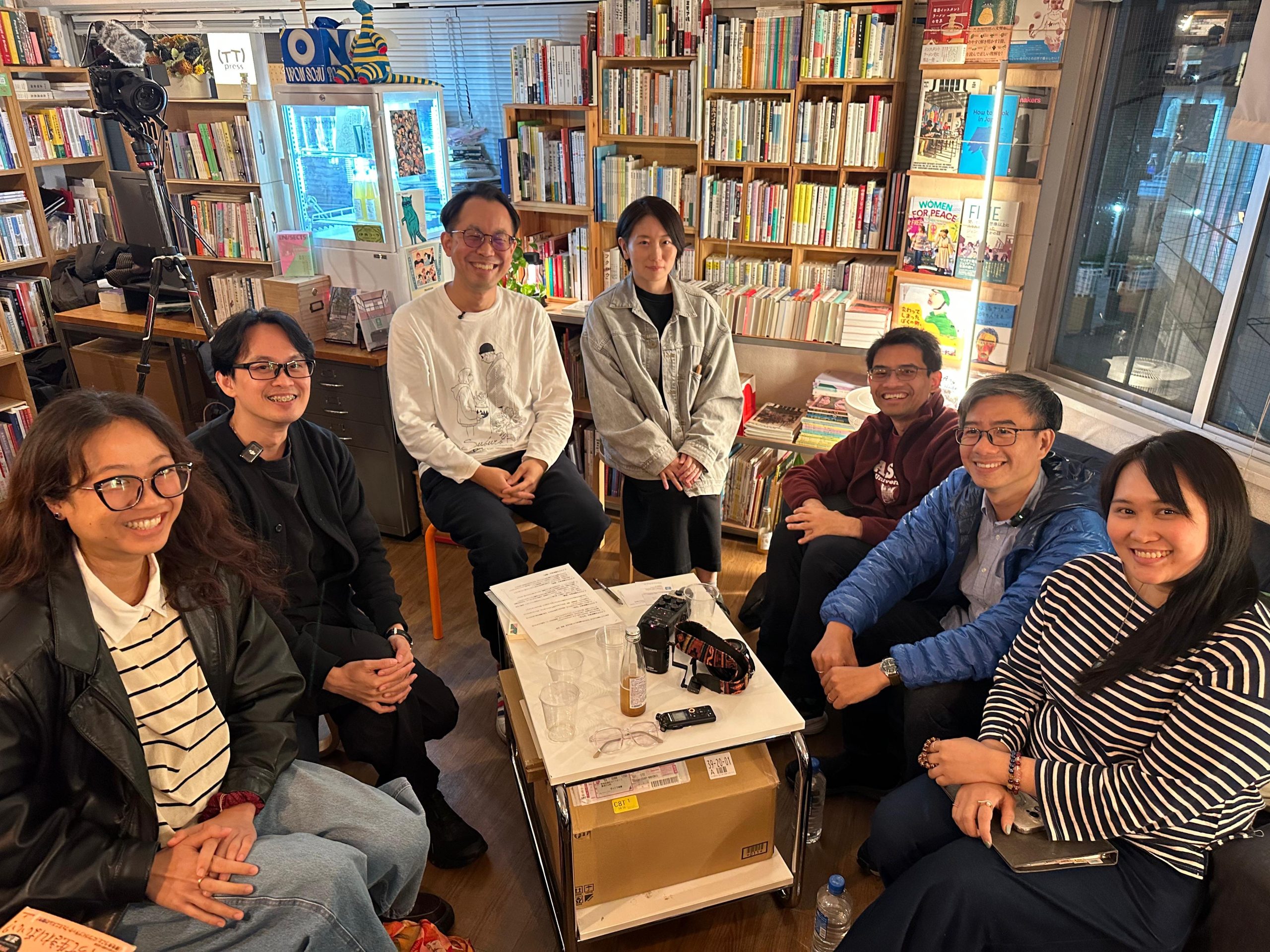
At the bookstore, platform3, in Higashi-Nakano
Career Beginnings
Fukutomi:
I’m looking forward to our conversation today about Japanese and Southeast Asian literature, translation, and related cultural exchanges. Our participants are all translators of Japanese literature into their own languages, and I myself translate Thai literary works into Japanese.
Specifically I hope to discuss what it’s like to pursue a career as translator in your countries, how translators from Japanese can make a living, and indeed how viable it is to make a living from translation in general. In Japan there are almost no people who make their living by translating Southeast Asian languages into Japanese, and so it’s difficult to cultivate new talent in the field, or even to map out a way forward for the next generation of translators. I’m hoping that we can have an in-depth discussion on ways to ensure the survival of translation as a profession.
To start, let’s go around the table one by one, so that each of you can offer a brief self-introduction and an outline of your work.
At the bookstore, platform3, in Higashi-Nakano
Andry:
I learned Japanese while studying IT at a university in Japan. Now I’m involved in both editing and translation while running a publishing house with my younger sister. To your question of how we earn a living, I’m lucky in that our publishing house enables me to earn a living not only as a book editor, but through its management as well. Sometimes we publish the books I translate, and sometimes they are released through other publishers.
Wulan:
I studied Japanese in the Japanese studies department at the University of Indonesia. In 2016 I went to study in Kyoto for a year, and after graduating I worked as an interpreter for a Japanese company in Indonesia. I’d translated English song lyrics into Indonesian as a pastime since I was a child, so while working at my company as an interpreter, I hoped to translate literature and novels one day. The first literary work I translated was Dazai Osamu’s Ningen shikkaku [trans. No Longer Human]. Andry had put out a call on Instagram for translators of modern Japanese literature, which a friend shared with me. At that time I was actually already translating Ningen shikkaku bit by bit, so I reached out to him. We’ve been in touch ever since.
Meen:
I started studying Japanese independently in my second year of high school. At university, I entered the Japanese department, and from around my second year I was translating things like Japanese fashion magazines, which were popular in Thailand at the time. After graduation I became a newspaper reporter, covering entertainment—movies, theater, concerts—and the literary world for three years. After that I quit my job as a reporter and, through a friend who made short films and documentaries, found work as a kind of creative assistant, writing scripts and so on. But then shooting became impossible due to the Covid pandemic, leaving me with time on my hands, so I decided to double down on translation, which was something I’d been wanting to do for some time. I translated part of a Japanese novel and showed my work to Thai publishers.
Dung:
My main job is Japanese–Vietnamese interpreting, and I translate Japanese novels as a hobby. I say “hobby,” but I spend a great deal of time and effort on it. I studied in the Japanese department at the University of Languages and International Studies, Vietnam National University, Hanoi, and spent my third year studying at Osaka University of Foreign Studies. After that, I became a Japanese teacher at my alma mater, but it didn’t pay enough to live on, so I left that position to become a freelance interpreter. I first began translating Japanese during university, when my girlfriend, now my wife, went to study in China. I wrote her a letter almost every week, and I would include translations of short stories by Kawabata Yasunari in them. After graduation we got married, and my wife joined a publishing company founded in 2005 as an editor of Chinese texts. That company ended up buying the rights to and publishing a large number of Japanese novels, and I started translating them. My first assignment was Yoshimoto Banana’s N.P., and after that came Kitchen. I’ve translated twenty novels so far. I often translate at a café for a change of pace, but the translation fee barely covers the cost of coffee. That’s the harsh reality.
Hazman:
I translate Japanese literature while doing research for my PhD at Waseda University. I began studying Japanese in my first year of middle school. I studied Malay, English, Arabic, and Japanese at an educational institution run by the Malaysian government. My Japanese teacher introduced literary works to us in class, including Natsume Soseki’s Kokoro and Mon [trans. The Gate] and Murasaki Shikibu’s The Tale of Genji, which stimulated my interest in literature. At university, I studied Chinese while majoring in economics. Then, when I was studying for my master’s degree in philosophy, I realized that I wanted to study Japanese again. The first time I came to Japan was in 2018, when I was invited to participate in the Japan Foundation’s “Talk with Muslims” program. On that occasion, not only did I learn about Japan’s traditional culture and issues around religion and diversity, I was able to converse with Japanese researchers, deepening my interest in Japan. I bought an old copy of the complete short stories by Kawabata Yasunari in Jinbocho [laughs]. Reading that made me want to translate “The Silver Fifty-Sen Pieces,” and that’s how I got started. My translation of that was published in a Malaysian literary journal.
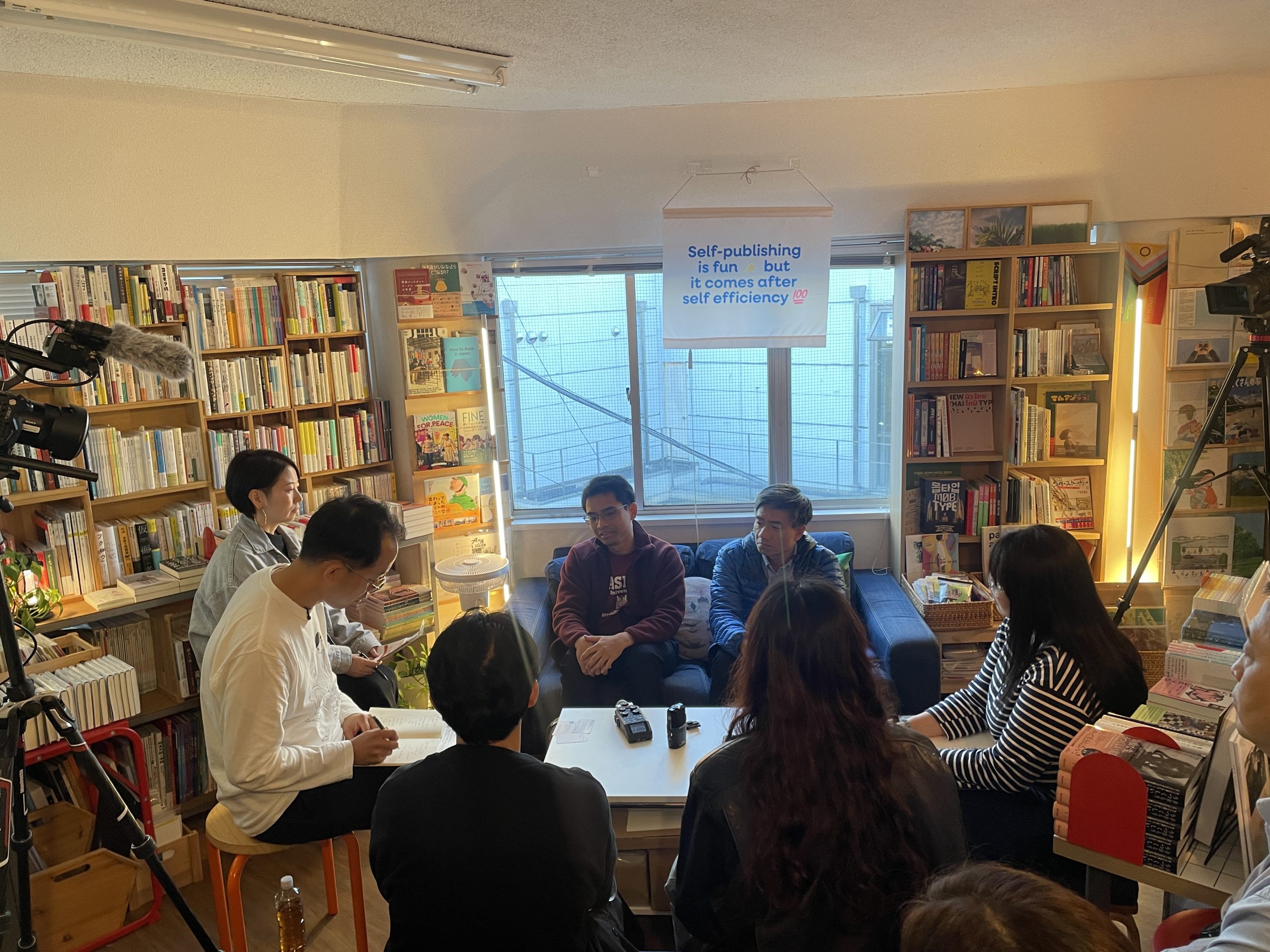
On Work Ratios
Fukutomi:
So all of you do other work besides translation. Roughly what proportion of your workload would you say is translation?
Andry:
Editing is 70%, translation is 20%, interpreting 5%, and the remaining 5% is other work.
Wulan:
I’ve moved my base of operations from Jakarta to Australia and do other work now, so I have almost no time for translation. But when I do manage to block out time for it, I spend around 40% of it on translation. Right now I’m editing an anthology.
Meen:
As a freelancer, I do translation, interpreting, and event coordination. When I have event work, that’s about 60%. There are a lot of production meetings, and I work on translation at night. Translation is about 40%. When I don’t have event work, I work on translation all day. This is a balance I’m hoping to maintain.
Dung:
I’m basically busy with interpreting work, so I interpret during the day, and then spend an hour or two after dinner at home translating. Translation requires discipline, I find. It’s easy to get rusty if you stop translating for a while and quite difficult to recover that facility, so it’s important to keep at it little by little. I make a habit of handwriting my translations when I don’t have a computer and typing them up later. My recently published translation of Murakami Haruki’s Machi to, sono futashika na kabe [trans. The City and Its Uncertain Walls] took me about half a year, working not only after dinner but also in free moments between other tasks.
Hazman:
I’m writing my PhD thesis now, so I don’t have much time to translate. When working on my translation of Yagisawa Satoshi’s Morisaki Shoten no hibi [trans. Days at the Morisaki Bookshop], which was published last year, I set myself the rule of spending three hours per day on translating.
Fukutomi:
It seems that finding time to work on literary translation between other responsibilities is something you all have in common.
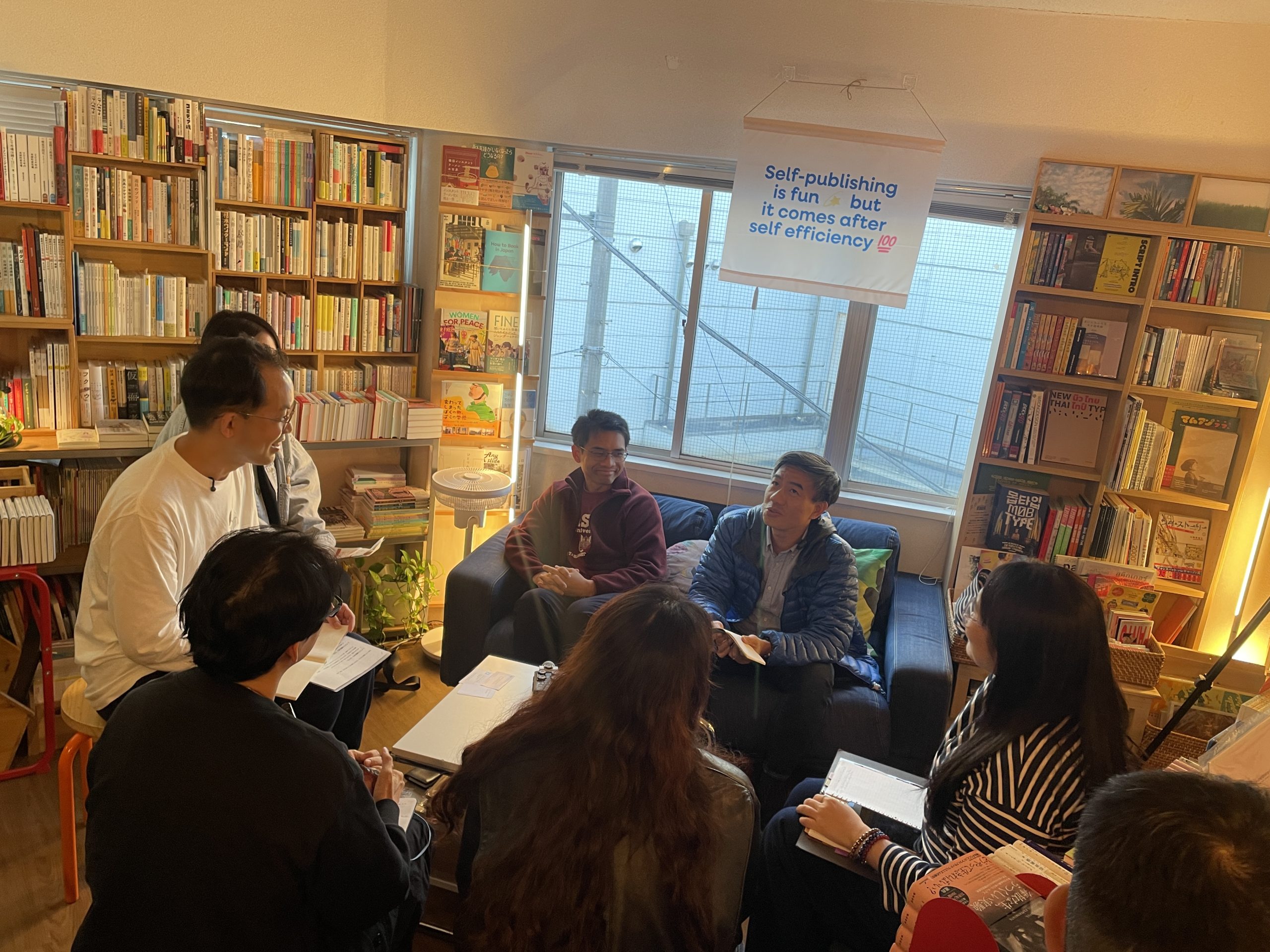
National Trends in Translation
Fukutomi:
Collectively, you have translated many novels across a range of genres. Who decides which works are translated to begin with? Do translators suggest books, or do publishers assign them?
Andry:
At our publishing house, we translate works that interest us. That said, all kinds of Indonesian publishers are handling Japanese literature lately, and that has made it necessary to look at the overall balance and think about marketing. My sense is that a lot of Japanese mysteries have been published in Indonesia over the past year or two. Next would come “healing fiction”—books with cats and bookstores and so on in them.
Wulan:
There aren’t many readers of Japanese literature in Indonesia, but within that minority I think many are reading novels by female authors. I suppose the kind of Japanese literature that’s being translated in the English-speaking world at any given time also has an effect. I don’t know whether this is a temporary trend or not, but personally, I’d like to translate more works by female authors, and I’d like to research and find great books myself. I find it hard to say no to people, so most of the translations I’ve done so far were requested by publishers. That said, I did translate Tamura Toshiko’s Miira no kuchibeni [Lipstick on a Mummy] after learning about it in a paper by Yoshio Hitomi (Professor, Faculty of Letters, Arts and Sciences, Waseda University)—someone I met on this program.
Meen:
When major publishers in Thailand are recruiting translators, they post on their corporate social media accounts. If you contact them and pass the test, they might offer you three books and ask which one you would like to translate. At first, I accepted work in any genre. After I’d published a few books and accumulated some experience, I started receiving offers from publishers who wanted me to handle specific works. Lately, publishers have started asking me, “Any interesting books in Japan lately?”
Fukutomi:
In Japan, there are translation companies and agencies. When freelancers register with them, translation work comes their way. It sounds like publishing companies handle that in Thailand.
Meen:
That’s right. When I was starting out, horror novels like Suzuki Koji’s Ring were popular in Thailand. After that, mysteries and detective novels were well read for a few years, and in the past four or five years “healing fiction” has been popular. Lately, there are more books on themes like feminism and LGBTQ issues. While major publishers are concentrating on “healing fiction,” there are smaller publishing companies that are going their own way.
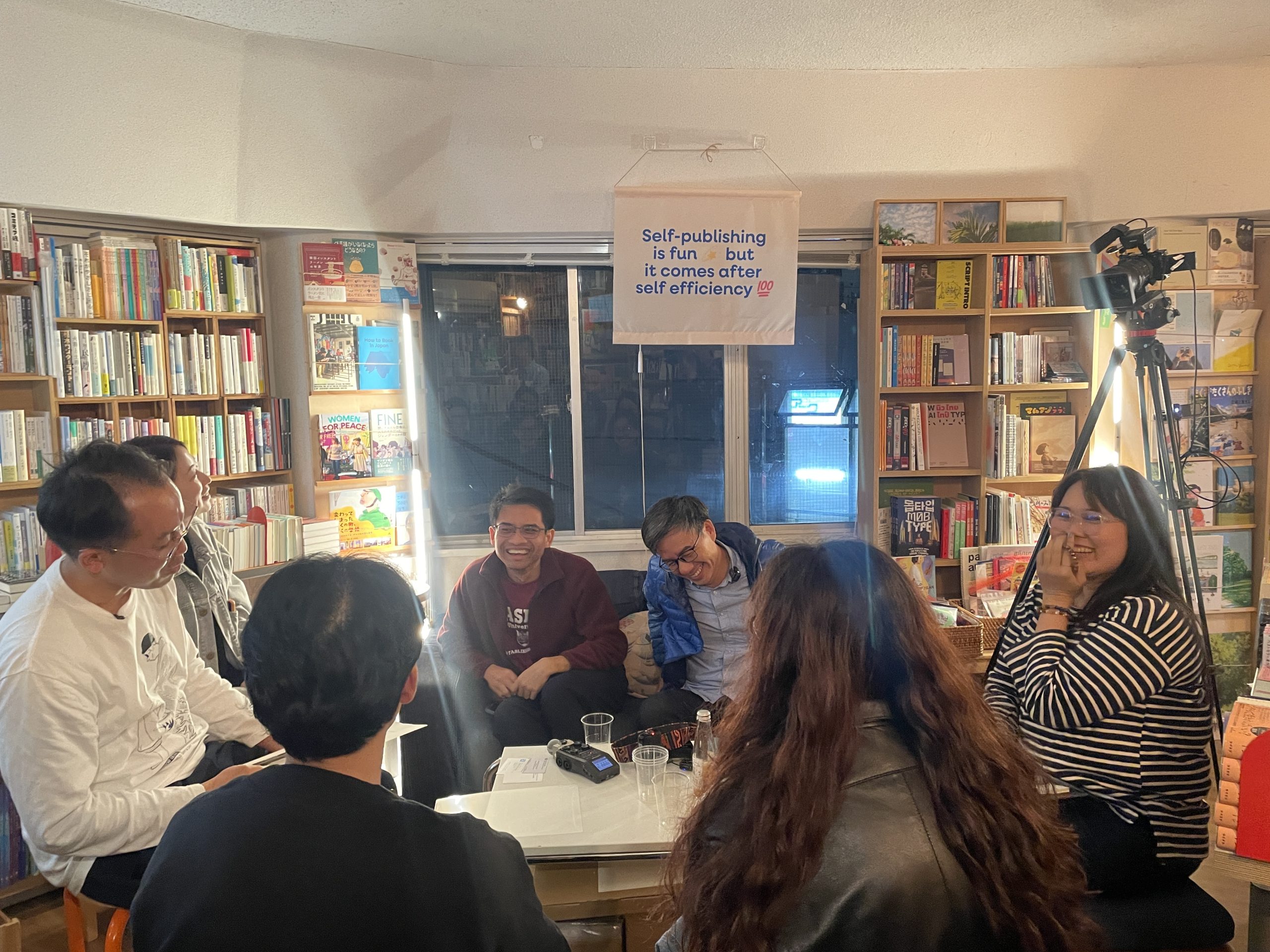
Dung:
Unlike the other participants, I only work with one publisher. Their editors are very particular, and as well as checking the translation against the original they have a third party decide whether it reads naturally as Vietnamese. Sometimes I bring works that I like to the publisher and have them buy the rights, and other times I choose from the books they’ve already bought the rights to. I want to try my hand at all kinds of genres and styles, so I’d like to translate as broadly as possible—female authors, authors from the past, contemporary authors, everything.
Fukutomi:
You never work with other publishers?
Dung:
I want to stay in close communication with my editor while I translate, so I often turn down offers from other publishers. Checking against the original is especially important. In a long novel, your concentration inevitably falters, and a second set of eyes can help you notice many things. Also, because I speak Japanese, I feel that I’ve translated the Japanese as it is into Vietnamese, but to Vietnamese people who don’t speak Japanese, sometimes the sentence doesn’t make sense. So a check to make sure that the pages read naturally in Vietnamese is important. The editors point something out to me, I offer a different proposal, and we repeat the process.
Fukutomi:
Malay readers are influenced by works translated from Japanese into English, so I think that is something publishers keep that in mind when searching for works to translate into Malay. Twenty or thirty years ago, when the Malaysian government’s research facility translated Japanese literature into Malay, they were mostly read by a limited group of people: university students and professors, specialists in Malay literature, and so on. Writers like Natsume Soseki, Kawabata Yasunari, Tanizaki Jun’ichiro, and Dazai Osamu were translated into Malay, but at the time I don’t think there was much knowledge of Japanese literature generally. In Malaysia, it can be difficult to find work after graduating from university, so I would expect to see more demand for “healing fiction” among Malaysian youth.
Continue to Part 2
See Also....
-
Hitori biyori
by Aoyama Nanae#MorethanWorthSharing -
The Emissary
by Tawada Yoko#MorethanWorthSharing -
Convenience Store Woman
by Murata Sayaka#MorethanWorthSharing -
Contemporary Japanese Authors and Their Translators: A Meeting of the Minds
#SoutheastAsianTranslators&Editors2025#TranslatorRoundtable