
Literary Translation in Southeast Asia:
Translators Address Their Livelihoods, Readership, and Future (Part 2)
In November 2025 the Japan Foundation hosted a visit to Japan by five translators and four editors of Japanese literature based in Indonesia, Thailand, Vietnam, Malaysia, and Myanmar. For more information about that professional exchange, see here.
As part of that program, a roundtable discussion entitled “Literary Translation in Southeast Asia: Translators Address Their Livelihoods, Readership, and Future” was held on November 22.
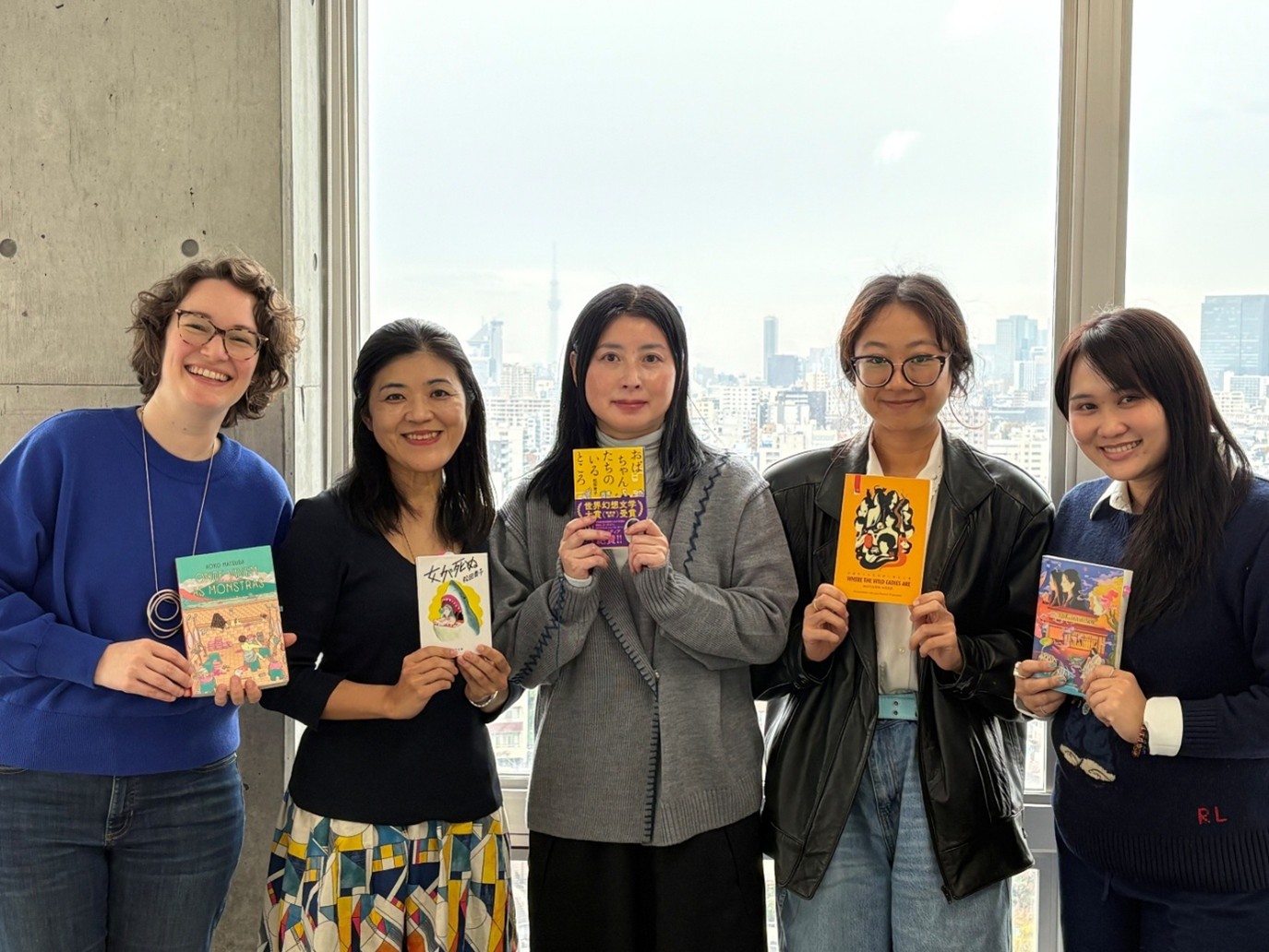
Participating were the following five translators:
- Andri Setiawan (Indonesia)
- Asri Pratiwi Wulandari (“Wulan”) (Indonesia)
- Mohammad Basil Hazman bin Baharom (Malaysia)
- Geywalin Likhitvidhayavuth (“Meen”) (Thailand)
- Luong Viet Dung (Vietnam)
Continuing the discussion moderated by Thai literary researcher and Thai–Japanese translator Fukutomi Sho, the participants reflect on the challenges and creative strategies involved in translating across languages and cultures. The session also addresses broader topics, including the role of translation in the age of AI, the challenges of fostering the next generation of translators, and how the profession and its expertise can be passed on. Here we present highlights from the latter half of their conversation.
Click here for Part 1
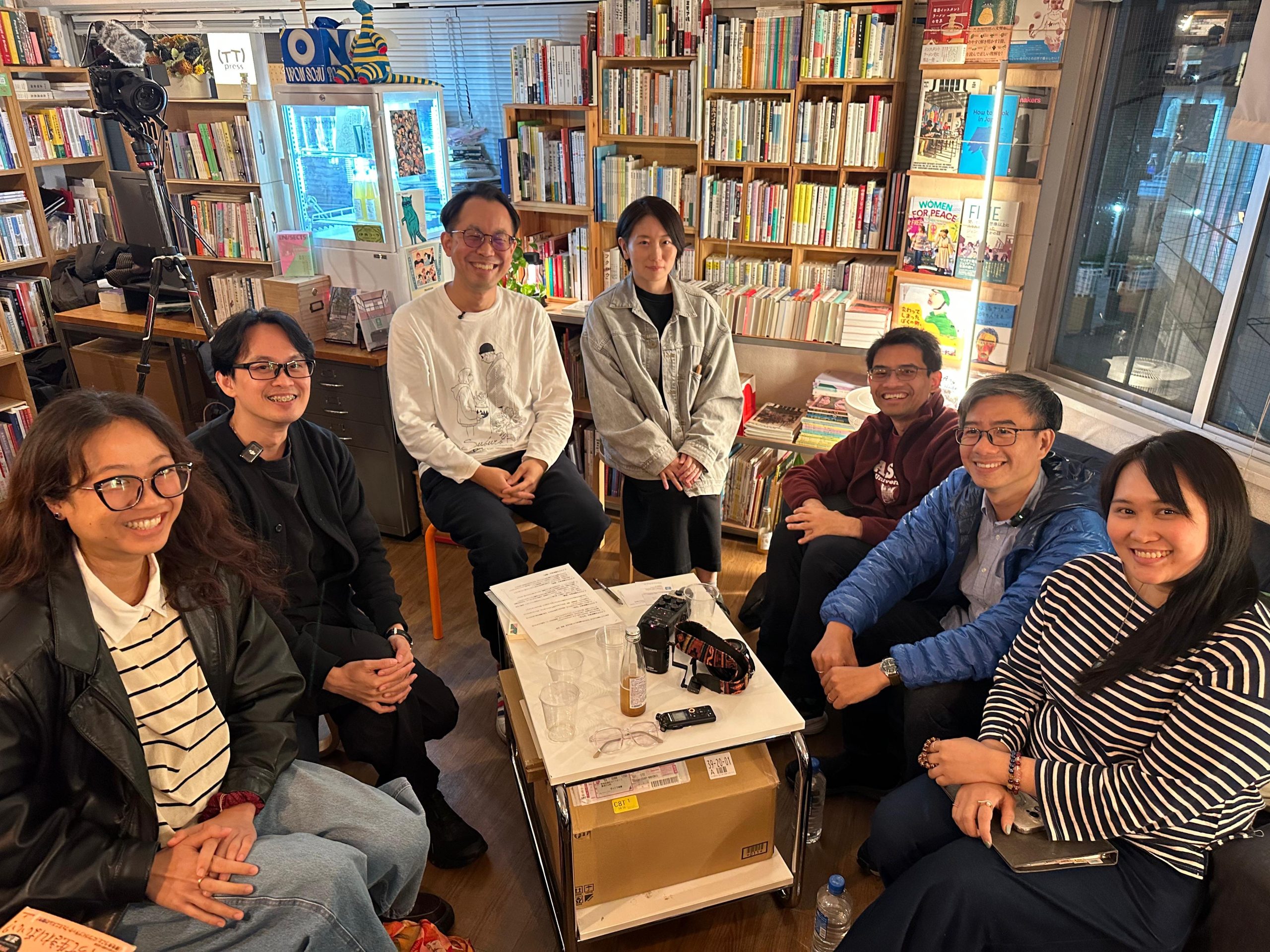
At the bookstore, platform3, in Higashi-Nakano
Honing Technique
Fukutomi:
Next, I’d like to ask about the things you find difficult when translating Japanese, and also about teaching translation skills and passing them on to the next generation. Incidentally, which language is hardest to translate into from Japanese? Is translating from Japanese to Vietnamese linguistically close?
Dung:
Translation from Japanese to Vietnamese isn’t close at all. I think you could say that Thai to Vietnamese is close, since the grammar is almost the same.
Fukutomi:
Both are isolating languages, aren’t they. While some translators come to the field having majored in Japanese, that’s not always the case. But even for those who did study Japanese at school, it’s not as though there were classes in literary translation available to them.
Dung:
At the university, they taught us basic skills for translation in general, but literature was essentially only mentioned. There were no classes in literary translation.
Fukutomi:
So, then, how did you all hone your translation skills?
Andry:
Trial and error. For better or worse, I was never provided with any theory, so I’ve taken a freer approach. It’s my publishing house; even if I make a mistake, it doesn’t affect any third parties, so I do my translations and keep an eye on reader reactions.

The Indonesian edition of Where the Wild Ladies Are by Matsuda Aoko, translated by Wulan
Wulan:
To translate into Indonesian, I ended up reading all kinds of Indonesian novels and learning from them. It’s useful to see the way things are depicted and the differences between how writers express things.
Dung:
As Wulan-san noted, first of all, it’s extremely important to enrich your vocabulary in your mother tongue. My personal method for improving my Japanese translation skills is turning expressions into patterns—asking what kind of Vietnamese expression would best convey a given expression in Japanese. Of course, in translation you have a range of options, and which one you choose depends on context. There’s a long history of cultural exchange between users of Vietnamese and English or French, so for those languages, certain sentence structures have established equivalents. However this is not the case with Vietnamese and Japanese—people my age are pioneering translation. So I study translation through other languages: I read English or French translations of Japanese novels, and notice that a certain expression is rendered like this in English, which means it should be like that in Vietnamese.
Hazman:
My approach is basically the same as Wulan-san’s. If I want to translate from a foreign language to Malay, I have to read works by Malaysian literary authors first. Before I started translating Japanese literature, I learned Malaysian literary technique by reading authors like Arena Wati and Anwar Ridhwan. For example, Kawabata Yasunari’s way of expressing things has a distinctive style to it, so I’m always thinking about how to render it in Malay. Japanese literature uses a lot of adages and set phrases, so I have to search for set phrases and sayings in Malay. For me, right now, I’m most focused on increasing my knowledge of the target language.
Footnotes, Proverbs, and Wordplay
Fukutomi:
You’ve mentioned adages and set phrases. There was a time forty or fifty years ago when many Southeast Asian literary works were translated into Japanese, and the biggest problem was the sheer number of footnotes. There would be a footnote for every species of plant, for example—if a mango tree was mentioned, there’d be a footnote saying “A mango is . . .” A book of 200 pages might have 400 footnotes. There were two reasons for this. First, at the time translations were performed by researchers. Translation was part of the research process. So a kind of “accuracy” was required, right down to the finest details. The other reason was the gaze of Orientalism. It was assumed that people in Japan knew nothing about Southeast Asia, and Southeast Asian cultures were treated as “exotic” or “curious,” which led to excessive footnoting. The number of translations of Southeast Asian literature in Japan went down after that, but recently it has picked up again. There don’t seem to be any publications now with as many footnotes as before, but in any case, when translating as a bridge between cultures, it’s necessary to think about asymmetrical power structures and unconscious hegemony.
When translating Japanese literary works into your own languages, all of you must naturally encounter expressions and things that don’t exist in the target language or culture. Broadly speaking, I think there are two approaches in this case: “domestication” and “foreignization,” as Lawrence Venuti put it. Essentially, this means either replacing those elements with something more familiar to the readership, or preserving the original text as something that feels out of place, even if it isn’t familiar to the reader. When you enter the commercial publication process, this poses various dilemmas. What do you all do? When translating a Japanese adage, do you use an Indonesian saying with a similar meaning, or do you create a new Indonesian saying by translating the Japanese one as is?
Wulan:
I handle sayings on a case-by-case basis. Also, now that searching for information on the internet is possible, I don’t want to make much use of footnotes. If words and foods from other cultures are put in italics, then the whole text ends up italicized, so I don’t want to do that, either. However, there are still many readers who are used to italics, so there are those who criticize publishers [for not using them].
Andry:
Like Wulan, I prefer to minimize my use of footnotes. I might insert a brief gloss in the text, or use a similar phrase in Indonesian, if one exists. Sometimes I leave the Japanese in. For example, when I was editing the translation of [Ichikawa Saou’s] Hunchback for publication, I came across the word furikake [a topping for steamed rice]. I proposed replacing it with abon, which is an Indonesian word for something similar, but it was pointed out to me that the two have different cultural values: furikake is inexpensive, whereas abon is somewhat pricey. Based on this feedback, I left furikake as it was. Whether domestication or foreignization is chosen, the choice has to be backed by rigorous thinking.
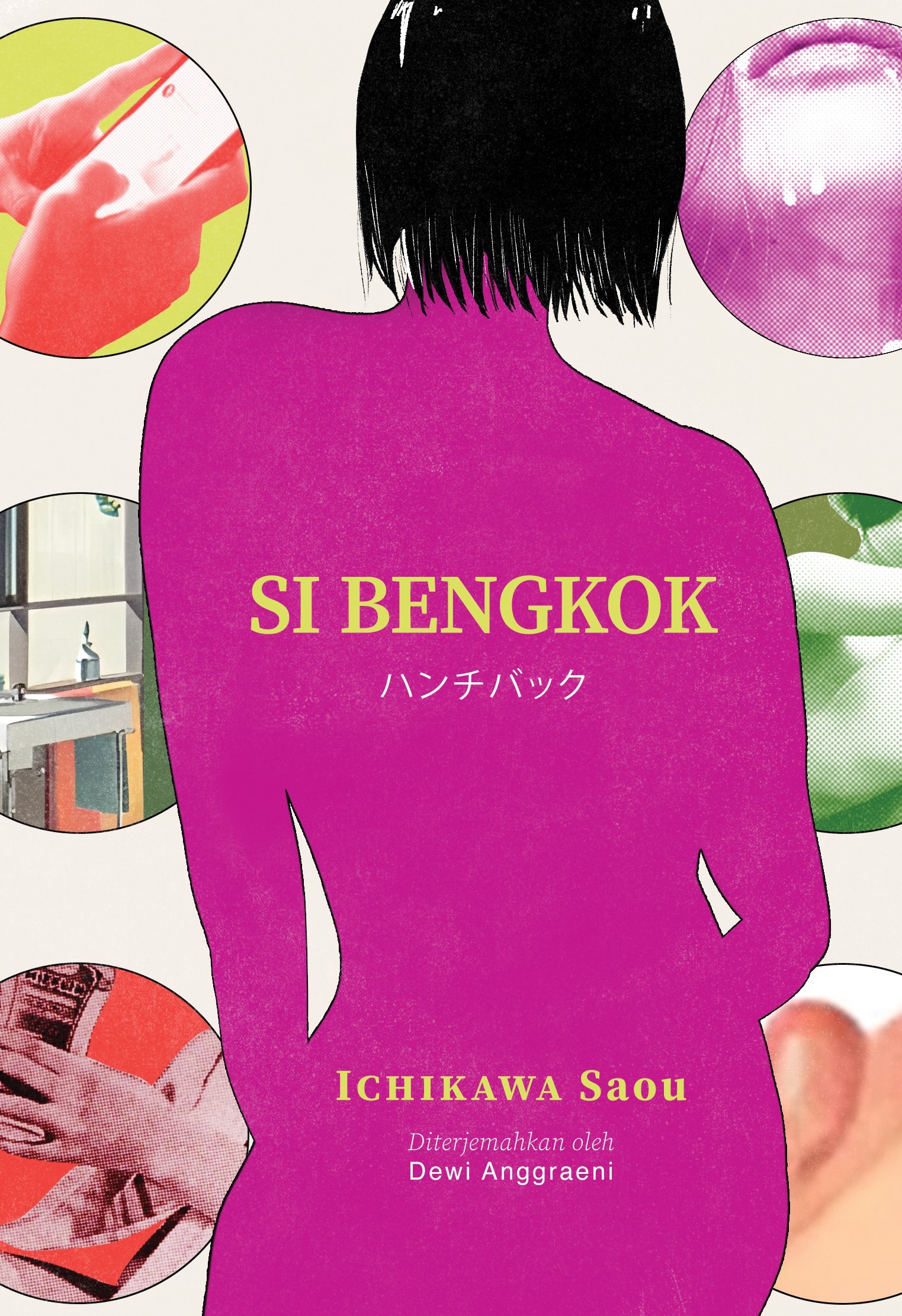
The Indonesian edition of Hunchback by Ichikawa Saou, edited by Andry
Meen:
As far as cooking goes, Thai people are used to Japanese cuisine, so additional explanations are seldom needed. On the other hand, place-names aren’t well known at all, so if I don’t provide footnotes, the publisher sometimes sends queries back. In cases like that I look at the whole and consider whether the extra explication is needed. That was the most difficult challenge when I translated Qudan Rie’s Tokyo-to dojo-to [trans. Sympathy Tower Tokyo]. The way places were written was not uniform, with intentional variation between katakana and kanji, and I agonized a great deal over both how this should be translated and how to explain it. In the end, I transliterated the words written in katakana, while for the words written in kanji, I decided whether to translate them into difficult words in Thai or not.
Dung:
In the past I added footnotes, but nowadays you can easily check things with AI, so I only include the bare minimum of footnotes. I also sometimes leave key words with context in Japanese. The same goes for adages and set sayings—I think about what effect they have, given the context in which they’re used. Many Japanese sayings derive from the Chinese classics, and the same is true in Vietnam, so most can be translated as is. For example, the Japanese phrase Saio ga uma derives from the classics and was similarly transmitted from China to Vietnam. That said, there are cases when Japanese and Vietnamese parallels have slightly different nuances, even when both can be traced back to China. If you translate those verbatim the meaning will differ, so I decide how to translate those sayings based on how they function in context.
As for wordplay, the extensive use of homonyms in Japanese is a challenge. When the wordplay has a crucial function, I sometimes depart from the source and devise some Vietnamese wordplay that yields the same effect. In interpreting classes at university my professor used to say, “Interpreting humorous anecdotes is the hardest thing; if you can’t get a laugh from the audience, say something else to make them laugh instead.” If worse comes to worst, I just say, “The speaker is telling a humorous anecdote, so please laugh” [laughs]. In other words, the atmosphere at the venue is what matters, and in novels, too, I work to convey the atmosphere in some simpatico way.
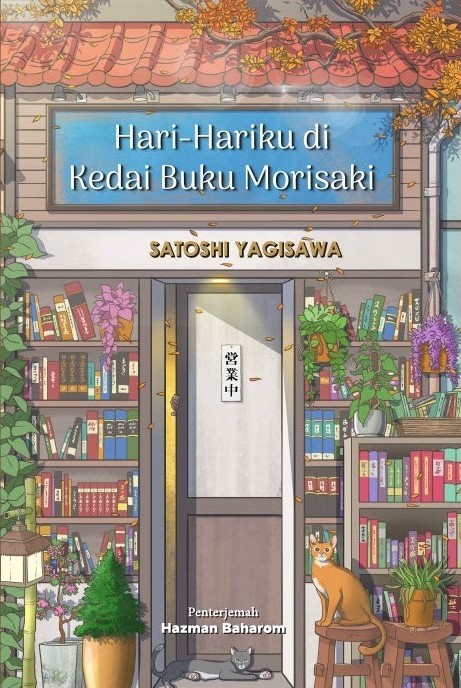
The Malay edition of Days at the Morisaki Bookshop by Yagisawa Satoshi, translated by Hazman
Meen:
I once translated the anime Ojarumaru [trans. Prince Mackaroo] for dubbing, and ran into trouble when the client said, “Make this part more fun.” Humor really is difficult.
Hazman:
In Morisaki Shoten no hibi, the terms shoji and fusuma are used, but in Malaysian and Indonesian culture, the two aren’t really differentiated. In Malay translation, the term used is pintu gelengsar, where pintu means “door” and gelengsar means “sliding.” So, in the Malay edition of the novel, I left in the words shoji and fusuma and explained their characteristics in a footnote. Also, the word komorebi (sunlight filtered through leaves) appears on the last page of the book and had to be explained. Komorebi is a very Japanese word, with no equivalent in Malay.
The Social Status of Literary Translators
Fukutomi:
A few of you have mentioned that the final decision on what works in translation rests with the editor or publishing house. Customarily, in Japan, the translators of literary works are often relatively deeply involved through the editing and publishing process. You might say that they receive a great deal of credit for each translated volume. The fact that this doesn’t equate to income is a separate issue, though. In any case, what’s the situation in your countries?
Wulan:
When working with major publishers in Indonesia, as a translator I don’t participate much in the editing process. I’m not even informed what was changed after editing. However, my name is put on the book, so readers will presumably think that any problems were caused by me. It’s a terrifying thing.
Meen:
When I say, “I translate books,” people respond, “That’s amazing.” But I do get a lot of feedback from editors. I speak very clearly to editors, saying things like, “This won’t do.” My name goes on the book as translator, so I make a point of clearly conveying what I’m unable to accept.
Andry:
I don’t think translation is a job you can do alone. Translators, editors, proofers, even, at times, native-speaker checkers are required. As an editor, I prefer translators who share their opinions after editing, like Wulan-san. Rather than pushing my own views I prefer thinking together when it comes to decisions about how to make the work better.
Dung:
In Vietnam, translators enjoy high social status, and there are even signings for translators. I was asked to hold my first signing at a book fair event to mark the publication of Murakami Haruki’s Colorless Tsukuru Tazaki and His Years of Pilgrimage. A Japanese reporter based in Vietnam came along and wrote an article describing their surprise at the fact that Vietnam has major signings held by translators, and wondering if this phenomenon was rare, globally speaking.
In Vietnam, there are two schools of thought on the status of literary translators. The first views them as co-creators with authors, while the other considers them imitators of authors. Regarding relationships with publishers, I think that translators are respected in Vietnam. However, there are two types of translators: those who care how their painstakingly written translations are corrected, and those who leave things entirely up to the publisher, saying they can do as they please. I’m in the former category, and people say I’m a little difficult. When I reject an editor’s suggestion, I make sure to explain my reasons carefully.
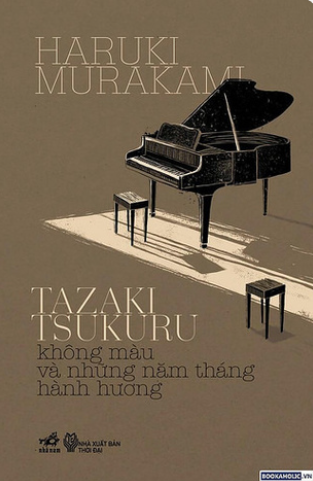
The Vietnamese edition of Colorless Tsukuru Tazaki and His Years of Pilgrimage by Murakami Haruki, translated by Dung
Hazman:
In Malaysia, translators are viewed in completely different ways by different people. They are greatly esteemed by other translators, publishers, and authors, but in general society the majority of people think, Translator are just translators. In Malaysia, literary translation is thought of less as an occupation than an “activity,” and you can’t make it your main livelihood. That’s why we do literary translation on the side. Of course, there are national and state-level translation organizations, but the people who work there are less literary translators than public servants doing their jobs. They have a strong sense of what is and isn’t their responsibility, and I suspect they consider it beyond their scope to consider whether a work will be read widely or not.
Fukutomi:
I translate Thai literature into Japanese, and sometimes work on quite serious, deeply political works of literary fiction, but I also translate so-called genre novels including “boys’ love” (BL) works. A lengthy work of literary fiction I once translated included many references to Thai politics and history, actual place-names, and the like, but I made the deliberate choice not to include a single footnote or comment.
Apparently some readers were dissatisfied by that decision, but I thought that reducing noise by dispensing with notes was the better choice, in order to preserve the flow of the story as much as possible. The publisher accepted this argument. On the other hand, I once found myself at odds with the editor while translating a BL work. There were many references to Thai history and politics, and when I submitted the manuscript to the publisher, the editor told me, “BL works don’t need politics or history,” and it looked like most of them would be cut. In the end I was able to restore it to something faithful to the original, but I had quite a debate with that editor. Perhaps for genre novels in areas like BL and light novels, different things are expected of an translator.
But in practical terms, in the case of Thai literature, translating genre novels often pays well, while the payment for translating literary fiction is frequently low. It’s royalty-based, calculated as a percentage, and tends to be quite meager. However, my impression is that when publishing books like this, the translator’s intentions are properly taken into account.
Mentoring, AI, and Translators’ Networks
Fukutomi:
We’ve touched on how the status of translators differs from country to country. Would you recommend your jobs to the next generation? Do you think that the numbers of people translating Japanese literature will grow?
Wulan:
When a translation workshop was held last year in Jakarta, attendance was poor. Translation is not only difficult, but it also pays poorly. The question of how to turn people who understand Japanese into literary translators is a difficult one, I think. Indonesia has many people who can speak Japanese, but extremely few who aim to do literary translation. The reason for this is a lack of education and spaces for learning. I don’t have many colleagues to hold workshops with, either.
Andry:
Lately, we’re competing with AI. We might even be replaced by AI, depending on our level—so we have to aim higher. Right now, I want humans to outdo AI.
Fukutomi:
Are there networks of Japanese literary translators?
Wulan:
I don’t have many friends who are Japanese translators, but I am friendly with translators from other languages, and speak with them often about all kinds of things, including the difficulties we face.
Andry:
My publishing house has created a group of Japanese translators, and Wulan and I are in it.
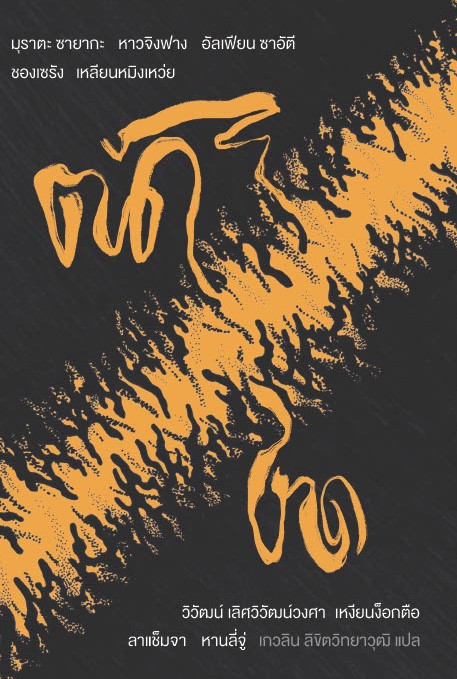
The Thai edition of Zetsuen [Insulation] by Murata Sayaka, translated by Meen
Meen:
I majored in Japanese, and took classes in Japanese literature from my first to third year in university. In my fourth year, we had to choose either translation or interpreting. Most people chose the interpreting course, which was the route to money and work. Of 24 people, I was the only one who chose translation, so the translation course wasn’t even held. In other words, there are no places where translators can formally train; the current situation is that people do it because it interests them. I know some people who have experience translating, but they seem busy with interpreting. If you don’t really enjoy translation, you won’t do it, I think.
Cultivating the next generation is important, but before that I’d like to meet more Japanese literary translators. There haven’t been any opportunities like that before, not even at book fairs. Also, Thai readers don’t pay much attention to translators, so I’m always pondering what to do about that. Self-promotion might be needed.
Dung:
There’s no formal training system in Vietnam, either. Or even an informal one. First, there are no networks or spaces where translators can gather. In addition, many translators are introverts by nature. I lead an interpreters’ network, announcing workshops via social media and giving various talks in cafés and such. At those events I speak a little about literary translation as part of my experience, but most participants are readers. I’d like to see more Japanese literary translators participate in such events, and would be happy to share my experiences and skills.
In this age of AI, whether I’m outdoing AI as a translator is a major question. I trialed it once, and found that for short passages, AI can translate well. However, for longer texts of 20 pages or so, unnatural parts emerged. And with AI translation, once a mistake appears, all of the following passages perpetuate it.
There are a huge number of Japanese speakers among Vietnam’s younger generation now. The problem is, they’re good at Japanese but bad at Vietnamese. How to address that is another issue.
Also, literary translators, and particularly literary translators from Japanese, have extremely low incomes. Interpreting leads to greater earnings, so literary translators either have to come from wealthy families or be so passionate that they almost don’t care about money at all.
Hazman:
One comment on AI translation. One of my hobbies is walking around town and then composing haiku. I compose them in Japanese and then translate them into Malay. Poetic forms with distinctly Japanese characteristics, like haiku and tanka, inevitably end up with strange forms, no matter what language you translate them to. If you translate this Hyakunin isshu poem into Malay using AI, “Chihaya furu / kamiyo mo kikazu / Tatsutagawa / karakurenai ni / mizu kukuru to wa” (Unheard of even in the age of the gods—the Tatsuta River binding its waters [to dye them] crimson), you wind up with a weird translation. Only when a person puts some thought into translating it can the beauty and flexibility of expression of tanka and haiku be conveyed. In my view this kind of expression, this beauty, is supported by and depends on human experience. Regarding the future of Japanese literary translators, Malaysia is in a similar situation to Indonesia. Malaysia has many Japanese speakers, too. From the eighties to the nineties, many Malaysians studied in Japan, but what they studied was industry and engineering; there was little interest in literary translation. For two years now a Malaysian haiku contest has been held, and there are about 40 or 50 participants. So far, the participants have an interest in traditional Japanese culture, but don’t seem very motivated to translate from Japanese to Malay.
Proactive Steps to Enliven the Field
Fukutomi:
Everyone seems to agree that spaces and networks for literary translators to gather are important. Do you think it would be good to have some kind of connection across national and regional boundaries, separate from the connections between translators in the same country? What kind of format would be preferable?
Dung:
Both are necessary. For example, South Korea and Taiwan have long-running projects to invite translators to their shores, and create opportunities for them to give presentations as translators. Take this event hosted by the Japan Foundation, for example. For young translators, participating in this kind of exchange is highly motivating. By bringing together translators of various nationalities we can learn about how things are in each other’s countries. Even on this program, I’ve become aware that I’m not the only poor translator [laughs].
Fukutomi:
Knowing what translators in other countries are doing is indeed important. In Japan, the notion that translators and interpreters fulfill only a secondary or supportive role gets in the way, and I often feel that there’s very little sharing of individual circumstances or insight because of that. Simply speaking out about their own approaches and experiences, even while upkeeping their duty of secrecy, sometimes subjects translators and interpreters to strong criticism from colleagues.
Also, even if public institutions like the Japan Foundation do support foreign language education, I believe that the relatively small number of positions available for those aiming at a high level of proficiency would remain a hurdle. Even in Japan, there are plenty of people who want to learn Southeast Asian languages at a basic level, but very few spaces or opportunities for those who go beyond that and wish to continue learning. I think it’s important to create workshops and other events where translators can interact with each other, and to provide courses that allow continued study. On a lighter note, making Japanese or Southeast Asian literature feel like a fun, lively scene at book fairs and other book-related events is also important.
Given how widespread the use of generative AI has become, I don’t think it’s realistic to expect dramatic improvement on the financial side. It’s not easy to offer a rosy picture career-wise, but at the same time, the fact that we all encounter the stories and experiences of others through words will never change. Instead of just doing the work our clients assign us, I’d love to see translators assert their autonomy and do more to shape the field.
At the bookstore, platform3, in Higashi-Nakano
See Also....
-
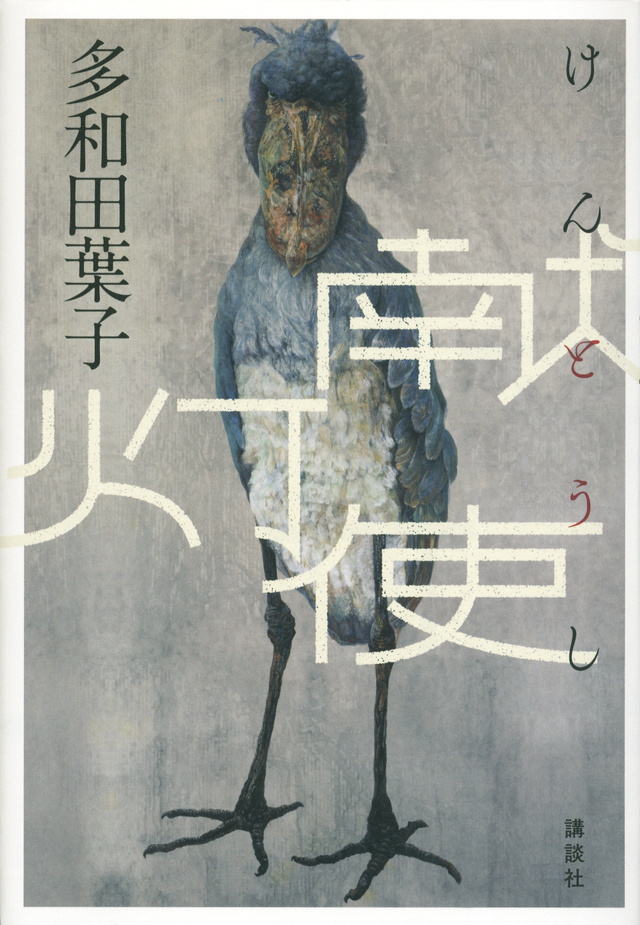
The Emissary
by Tawada Yoko#MorethanWorthSharing -
Contemporary Japanese Authors and Their Translators: A Meeting of the Minds
#SoutheastAsianTranslators&Editors2025#TranslatorRoundtable -
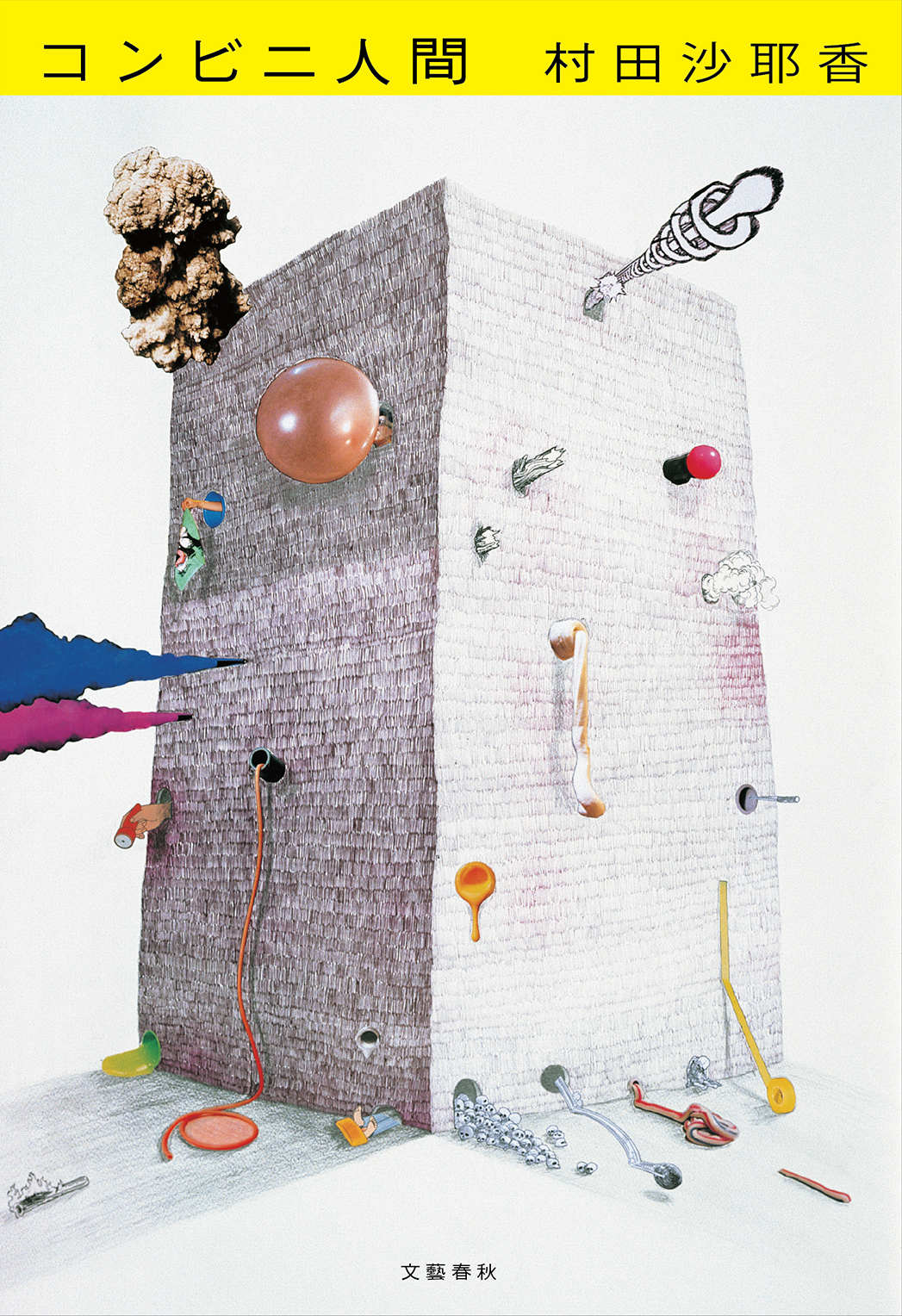
Convenience Store Woman
by Murata Sayaka#MorethanWorthSharing -
Literary Translation in Southeast Asia:
Translators Address Their Livelihoods, Readership, and Future (Part 1)#SoutheastAsianTranslators&Editors2025#TranslatorRoundtable